Sunday, November 27, 2011

India 27


Our day wandering around Old Delhi was a definite highlight. There were the winding streets and narrow alleys and shops selling all variety of goods. The spice market was a highlight, with a bunch of fragrant stalls. Then, suddenly, a dark passageway leading to a distant courtyard. Within that passageway, and the courtyard, was the hot pepper sales district. The volume of hot peppers being moved in Delhi is pretty impressive, and just walking through the passage made one's nostrils burn. Since "spicy" is the only flavor that I have much appreciation for, I quite enjoyed it.

As we emerged from the retail area, we found all sorts of presumable wholesalers pushing large quantities of goods by hand or hauling with any machine or animal they could. E.g, this guy moving what we estimate to be twenty tons of rice.

Saturday, November 26, 2011

India 26


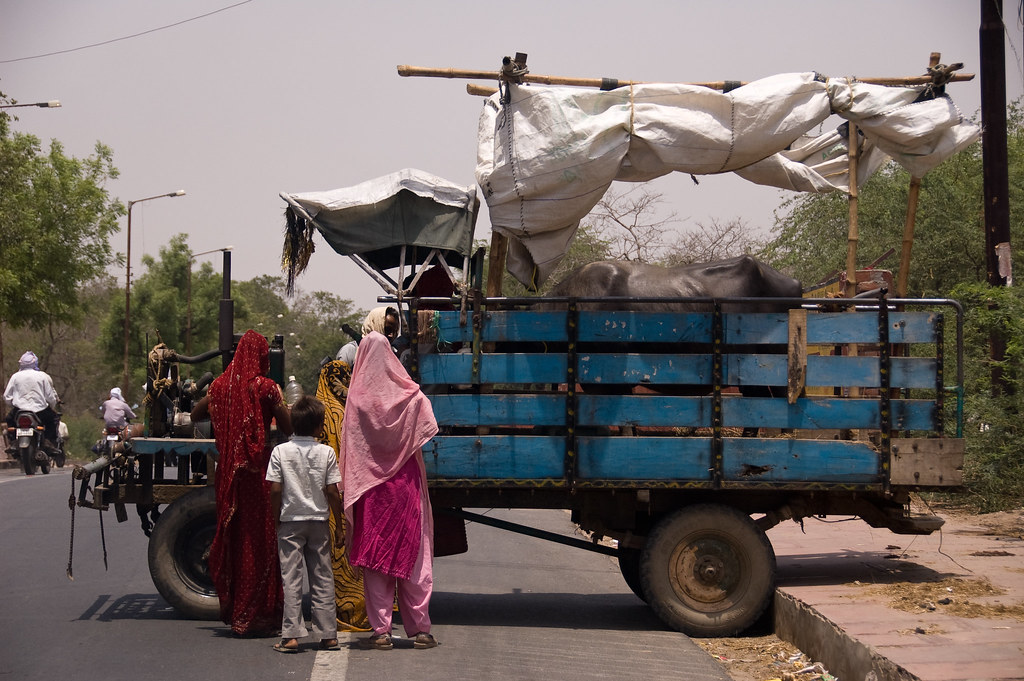
I guess we're sort of running out of stuff to say about India. I don't know how. We must have forgotten something. But this is another picture of a crazy truck that seems too old to possibly be carting a buffalo around the streets of India. Surely, that's part of the plan when you make a truck that has something like 5 total moving parts. Easy to repair; lasts forever.

Friday, November 25, 2011

India 25


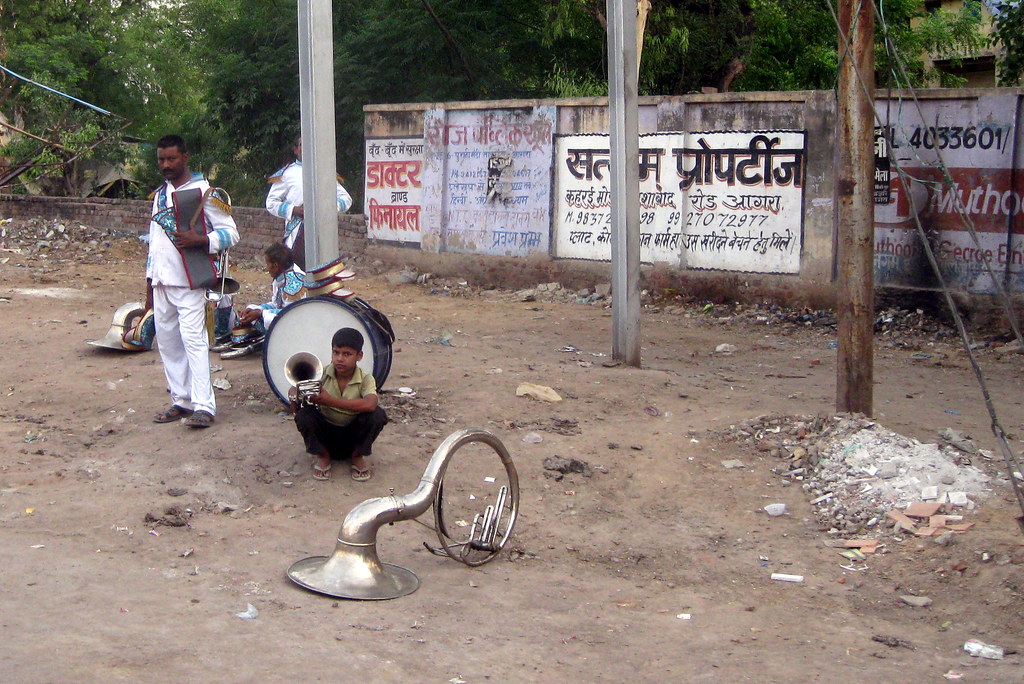
Available for birthdays and bar mitzvahs.

Thursday, November 24, 2011

India 24


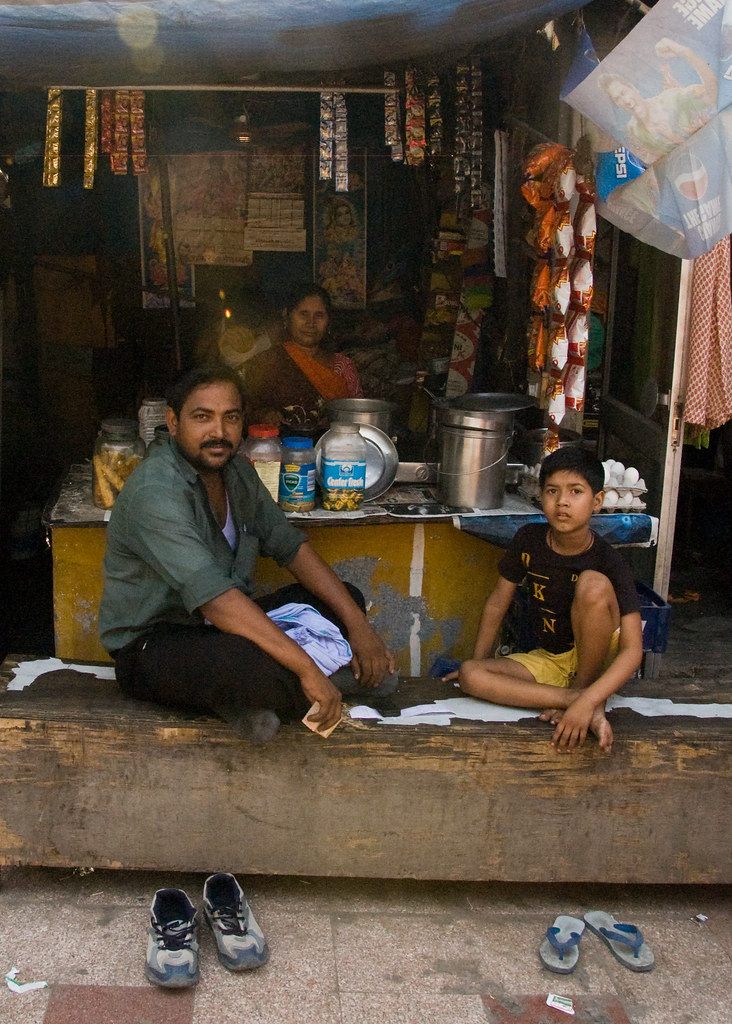
We love all the little sidewalk restaurants of India. Not that we ate in many, but we like the idea of them. And we're assuming these two were sitting down to have a big Thanksgiving meal, even though the picture was taken months ago, and they don't celebrate Thanksgiving Day in India, and for all we know, they weren't eating anything. But we didn't wind up with any pictures of turkeys in India, so this will have to do.

Wednesday, November 23, 2011

India 23


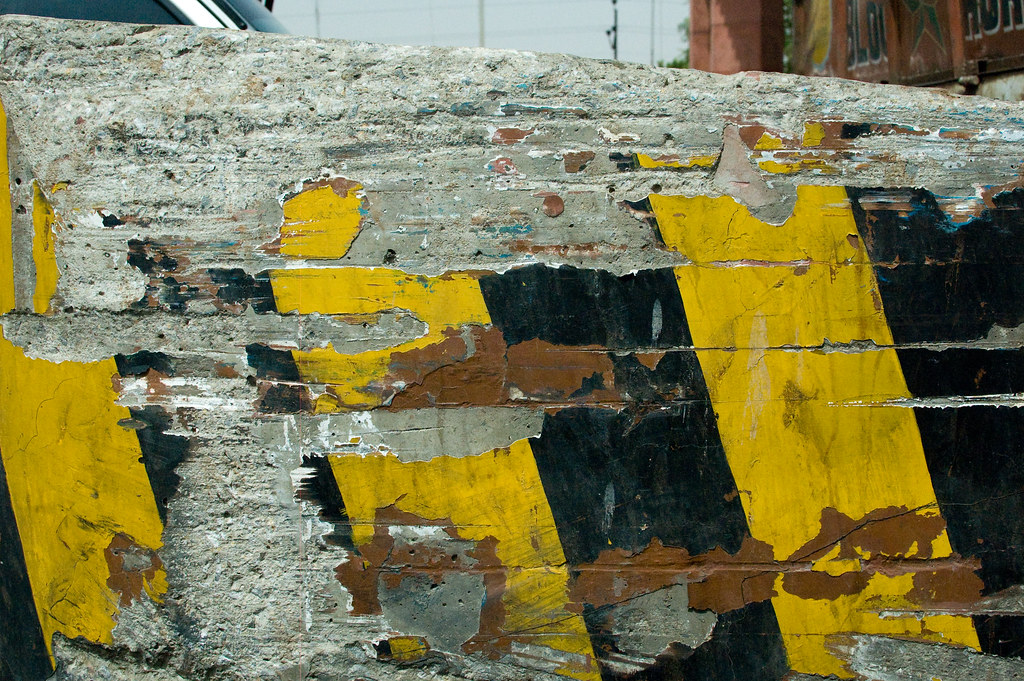
This photo doesn't exactly scream "India." But if you're a regular reader, you probably know that the staff photographer is a sucker for pictures of the texture of things that are falling apart. So there you have it.

Tuesday, November 22, 2011

India 22


I'm not sure what the trade of these young guys is. We saw a couple of them wandering around with these lamp contraptions. Are they selling the lamp? Is it just to aid them in shining shoes after dark? Customers put a quarter in and the lights flash and whirl? I'm sure there's something I'm missing here. It was very clear, in any case, that this was a young man's game. Like, probably not legal for them to be working young. I guess it's probably better than labor in a brick factory, but we'll reserve final judgment on that until we know for sure what the kids with the lamps were doing.

Monday, November 21, 2011

India 21


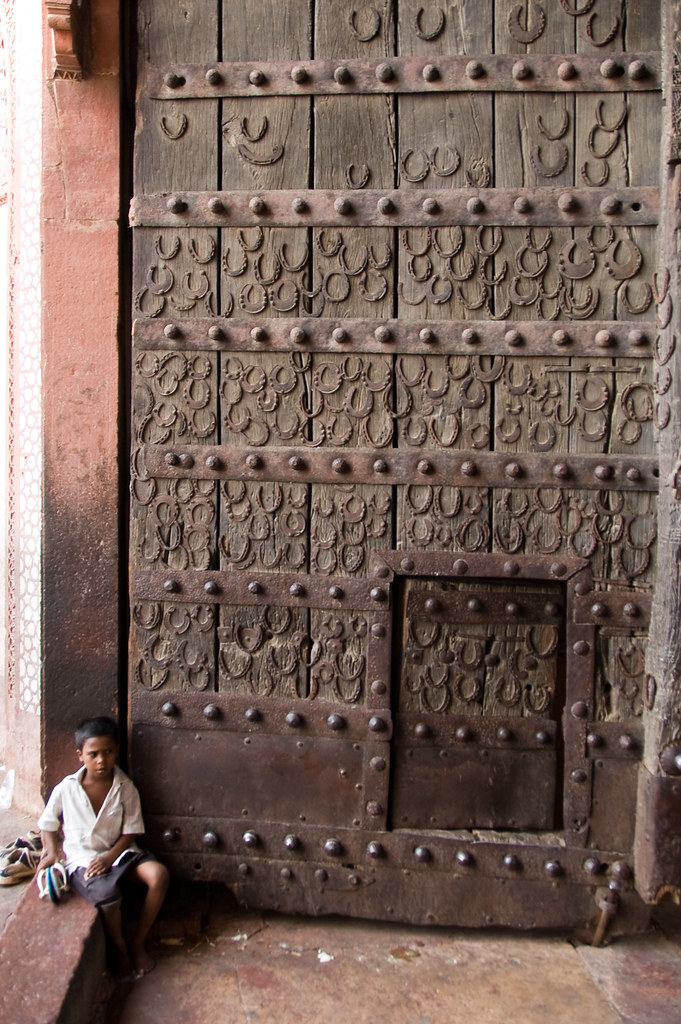
This youngster was one of many who would take care of one's shoes at the entrance of the mosque in Fatepur Sikri. In the style of any number of personal-service positions where someone does something for you that you didn't really need done, and would have preferred to do yourself, and then you're more or less obliged to tip them. The most famous example is the "restroom attendant." (I forget exactly where in our travels I walked into a restroom with an attendant, and immediately said aloud depsite myself "oh no you don't" and walked out. I guess I didn't have to go all that bad.) India is particularly good at this game, with various dudes always ready to "help" with whatever they can think of. It is, in many Indian tourist attractions, extremely difficult to avoid having a volunteer "guide," who even after being told in no uncertain terms "We don't want a guide and will not pay you," would proceed to follow us around and tell us fun facts about the site, and then for a tip. The shoe-minders at the mosque have a better racket in that one can theoretically imagine having one's shoes stolen were they left untended, and since you don't tip until you get your shoes back, you may never know what might have happened without them. Of course an even better racket would be to demand a payment up front, and then ensure the disappearance of the shoes of those who decline to pay.

Not sure what the horseshoes are for. Perhaps we should have paid a guide to tell us.

Sunday, November 20, 2011

India 20


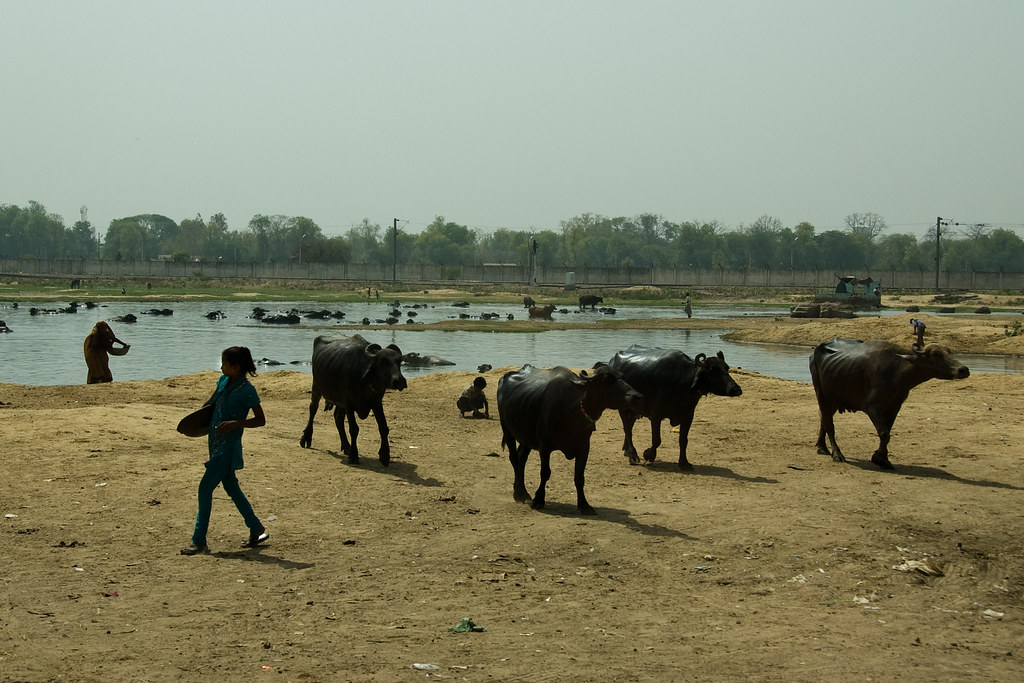
The staff photographer took this picture on a rural road near Fatepur Sirki. He recalls thinking when he took it that it was going to be fantastic - one of the best of the trip. It didn't quite turn out the way we hoped.

Anyway, hey - water buffaloes!

Saturday, November 19, 2011

India 19


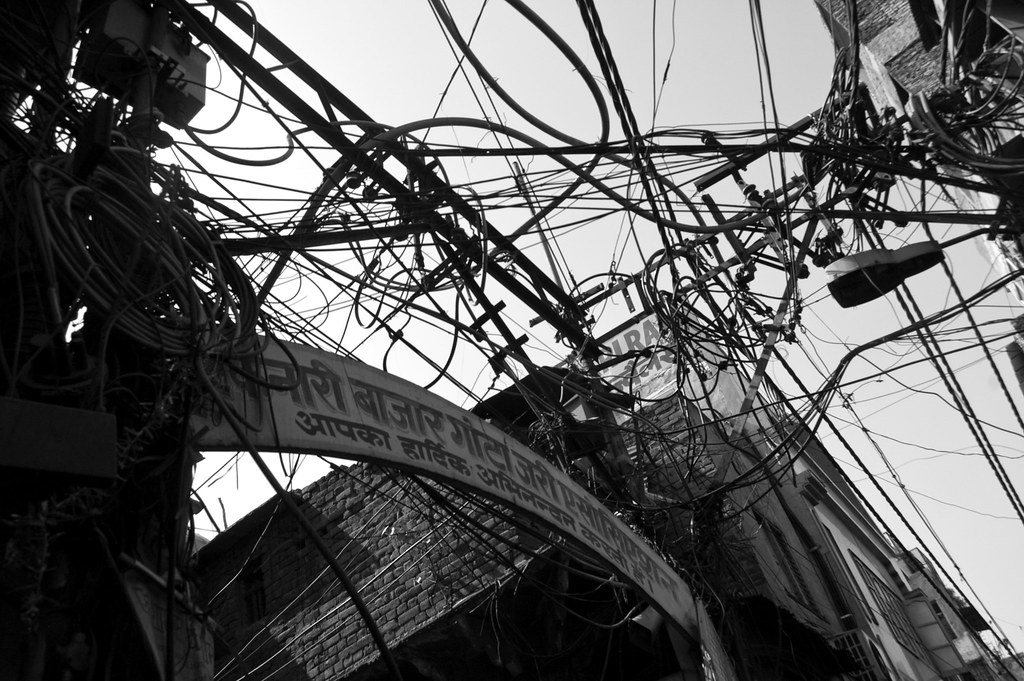
Messes of electrical wiring, often due to rampant hot-wiring of homes or businesses straight to the overhead wires, is common in a lot of the developing world. You've seen pictures like this before. But this one is from India!

Friday, November 18, 2011

India 18


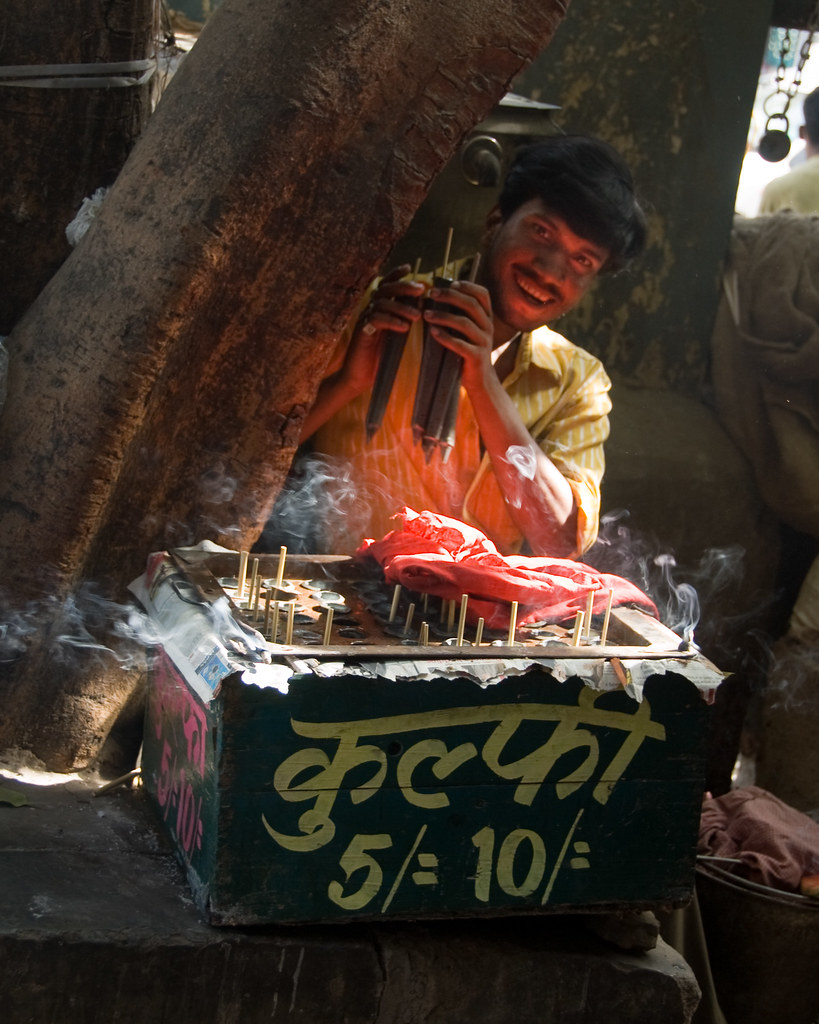
Street food in Delhi. We sampled a bit, but did not try whatever these Popsicle-looking things were. But given the steam from dry ice coming out of the cooler, it probably would have been a good idea. Instead we decided to have some fried pakora type thing. When it's 120 degrees out, a couple bites of deliciousness straight from the fryer turns out to be plenty.

We're happy that the cooler here is pretty sharp even though the guy's face isn't. An auto-focus failure early in the trip had us refreshing our manual focus skills throughout the rest of the trip, which is fine and dandy when you're shooting landscapes, but presents some serious challenges for street photography shooting from the hip.

Thursday, November 17, 2011

India 17


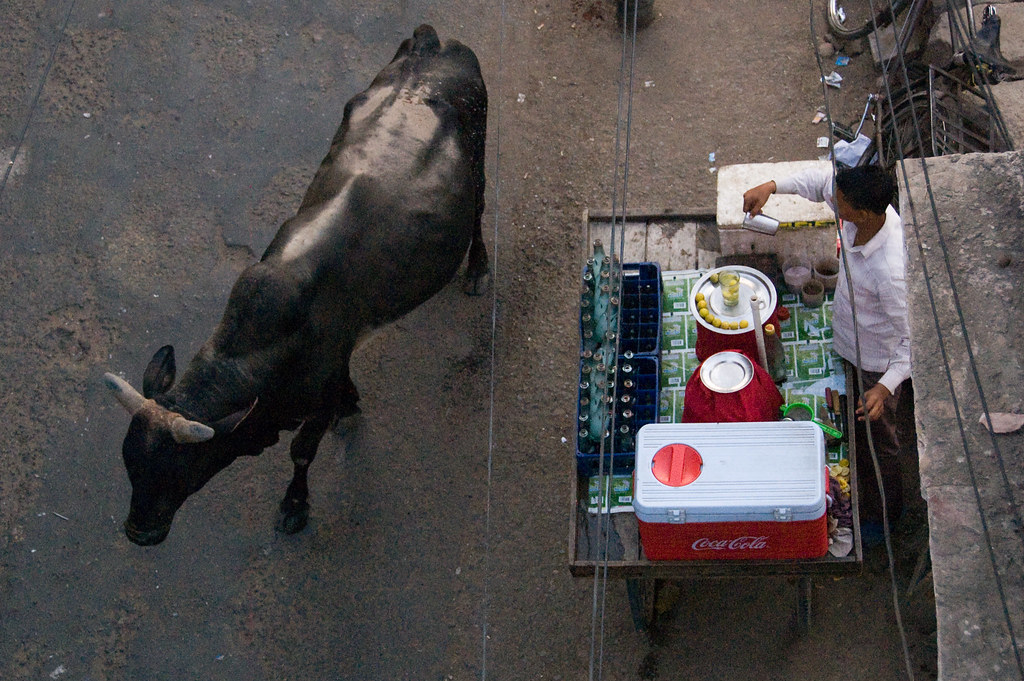
From a rooftop cafe in Agra. Yes, there really are cattle running around on the streets in India. The vendor at this little drink cart was splashing water at her, and she did manage to turn before bumping into his cart. Unknown if the two were related or not, but I would guess that was the guy's intent.

Wednesday, November 16, 2011

India 16


Another from the highway between Delhi and Agra. We're assuming the unmanned steering wheel visible here isn't actually involved in operation of the truck, but it wouldn't be out of the question. We saw several of these musical contraptions in transit but never saw one in operation. Another reason to go back.

Tuesday, November 15, 2011

India 15


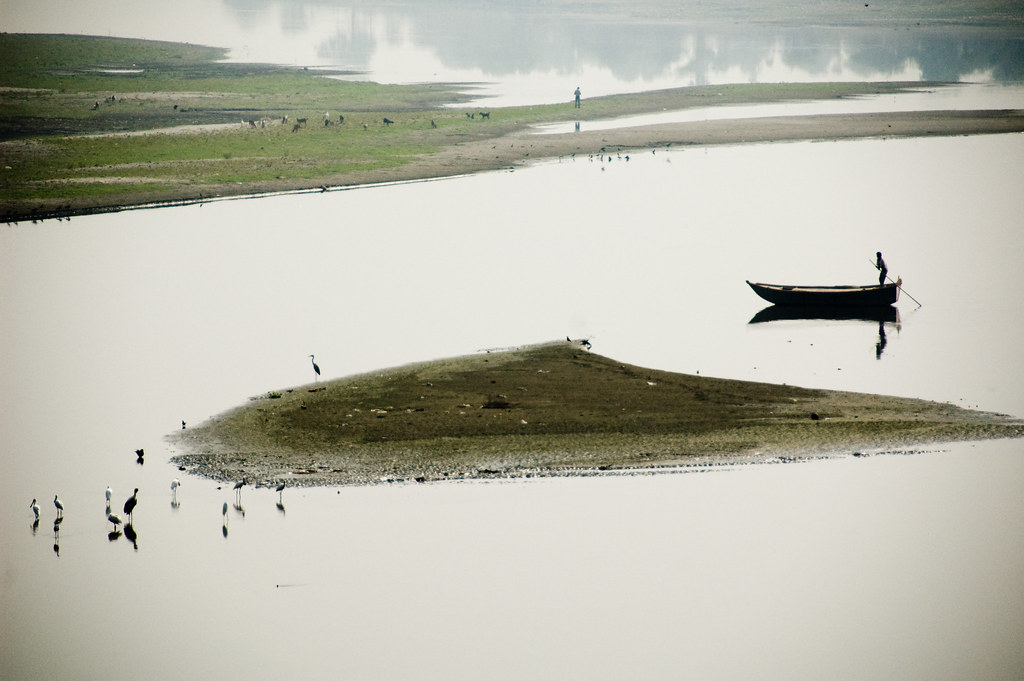
The Yamuna river, which runs by the Taj Mahal.

Monday, November 14, 2011

India 14


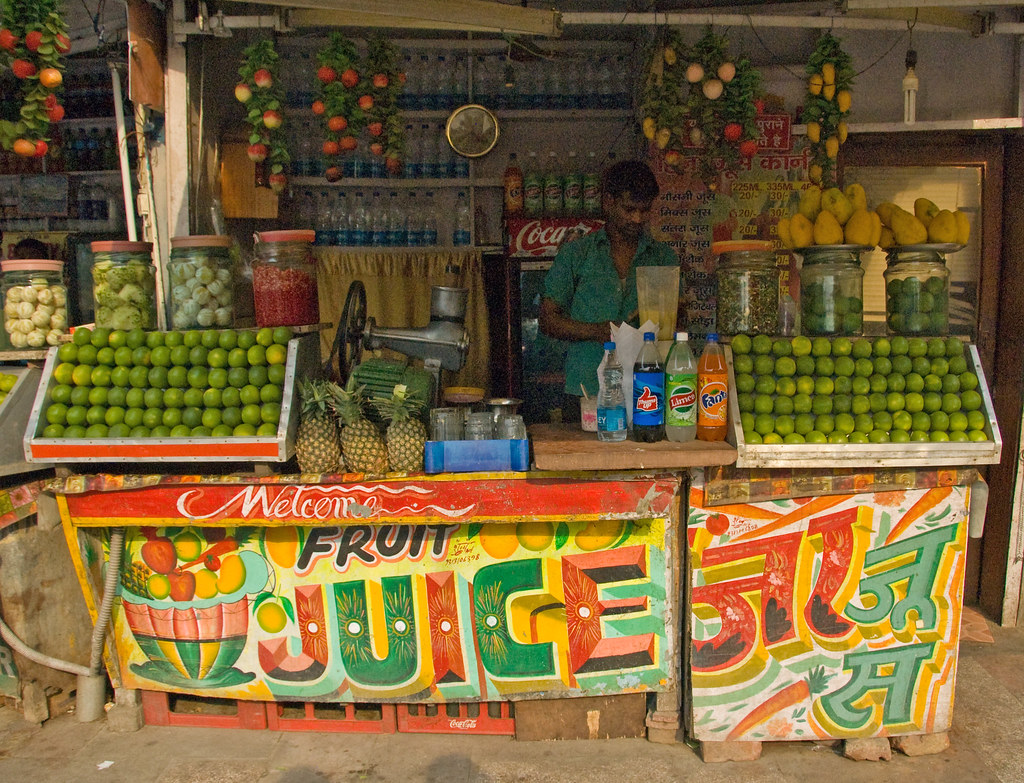
We had a tasty fruit juice at this stand. How could one resist? It's so colorful! And the big jars of fruit! And the olde timey grinder machine! One member of our traveling party who we won't name here was 98% sure that we were going to come down with dysentery after drinking juice here.

We lived!

The sun was really bright on the sign and shadows dark back where he was working, so that part has a lot of noise from trying to fix it after the fact. But once again, we lived!

Sunday, November 13, 2011

India 13


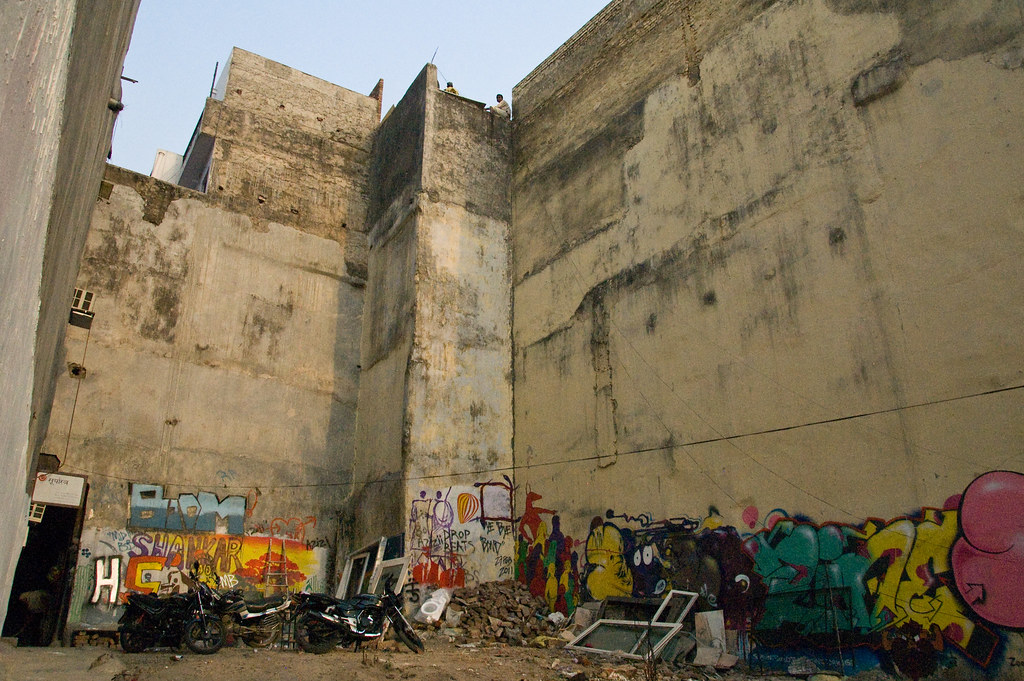
In Delhi. We liked the people on the top and the graffiti down below. Probably more of an "almost" photo than a real success, but it's Sunday and you shouldn't be on the Internet anyway. Go outside! Go read a book!

Saturday, November 12, 2011

India 12


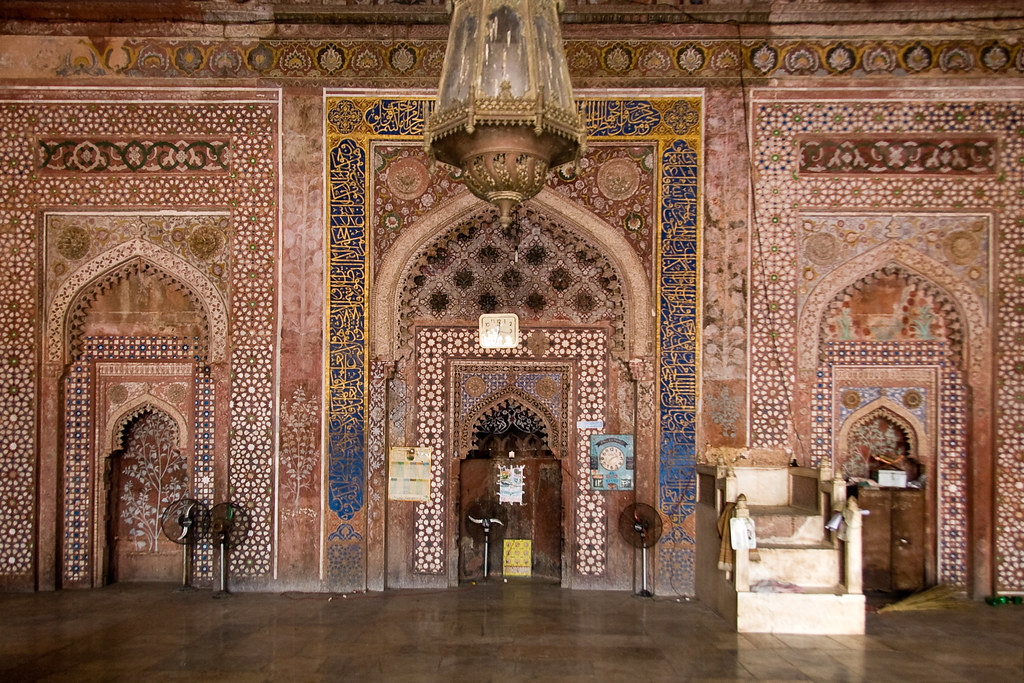
This Mosque is in Fatehpur Sikri, dates from 1571, and welcomed all visitors with open doors. As a result, there were a lot of people who appeared local to my eyes who had set up little encampments in the shady arcades that ring the courtyard of the mosque. They were not particularly elaborate; I'm not sure if that's because the people couldn't afford anything elaborate or if the encampments only lasted for the day and everyone left in the evening. Some were selling prayer beads or tourist trinkets or crafts. Others just seemed to be sleeping or hanging out or living.

When we returned to Delhi, we attempted to visit another famous old Mosque in Old Delhi (I think also called the Jama Masjid), with a somewhat different policy. Upon reaching the main door, we discovered that some enterprising fellows had printed up tickets and were charging a few dollars for obvious tourists such as your correspondents to enter. Our trusty guidebook claimed entry to the mosque was free, and we strongly suspected that this was a scam and none of the "ticket money" would go to the mosque. We told the ticket sellers so, and said we would not be paying but that we would still like to enter.

The ticket-sellers found our reliance on Lonely Planet's suggested price structure unconvincing, and physically pushed your correspondent away from the door. Not jostled, but the kind of push that a junior-high student delivers another when trying to provoke a fight. Perhaps even a "What are you gonna do about it?!" push. Your correspondent, ever the diplomat, restrained himself from pushing back, but I admit it took a bit of an effort to convince myself that de-escalation was probably the right call. One of the ticket-seller's goon companions was a guy who looked about 55 years old, but had a rod of bamboo about an inch thick and four feet long that I saw him swing forcefully and eagerly at a bunch of kids who were apparently too close to the door for his desire. He brandished it, threatening tourists who didn't want to pay their bribe (not limited to us at this point). Had it come to that, I can't promise that my restraint would have continued. He was wiry, but I could have taken him, stick or no. It did not come to that, but definitely not a public relations win for the Indian people.

In the end, we chose not to pay, and chose not to enter the mosque, which from what we could see of the courtyard through the door, was pretty similar to the one we'd seen in Fatepur Sikri, pictured again below.

Friday, November 11, 2011

India 11


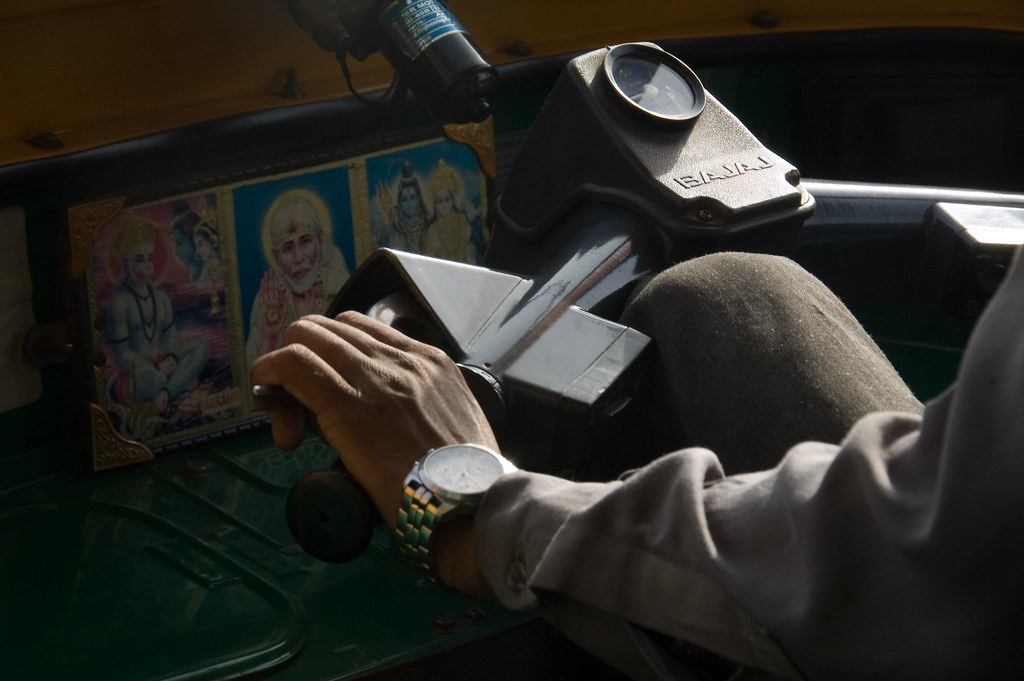
The primary decorative feature of the car we hired to take us to Agra and back. I find this Indian style of spiritual art really creepy. It's not just that the characters portrayed are occasionally blue. In this case the faraway eyes are part of it - although this is not a particularly egregious instance of creepiness. The little images by the steering column here are actually better examples. The weird airbrushed perfection of the figures is the closest thing I can put my finger on - they are perfectly drawn and realistically shadowed and yet idealized in posture and form, and glowing like a poorly executed HDR. But it doesn't seem like that's a complete explanation. I'm mystified by these images. Maybe that's the point.

I suppose contemporary Christian vernacular figurative art is equally creepy, although I'm having a hard time thinking of specific examples. More satisfying explanations welcomed.

Thursday, November 10, 2011

India 10


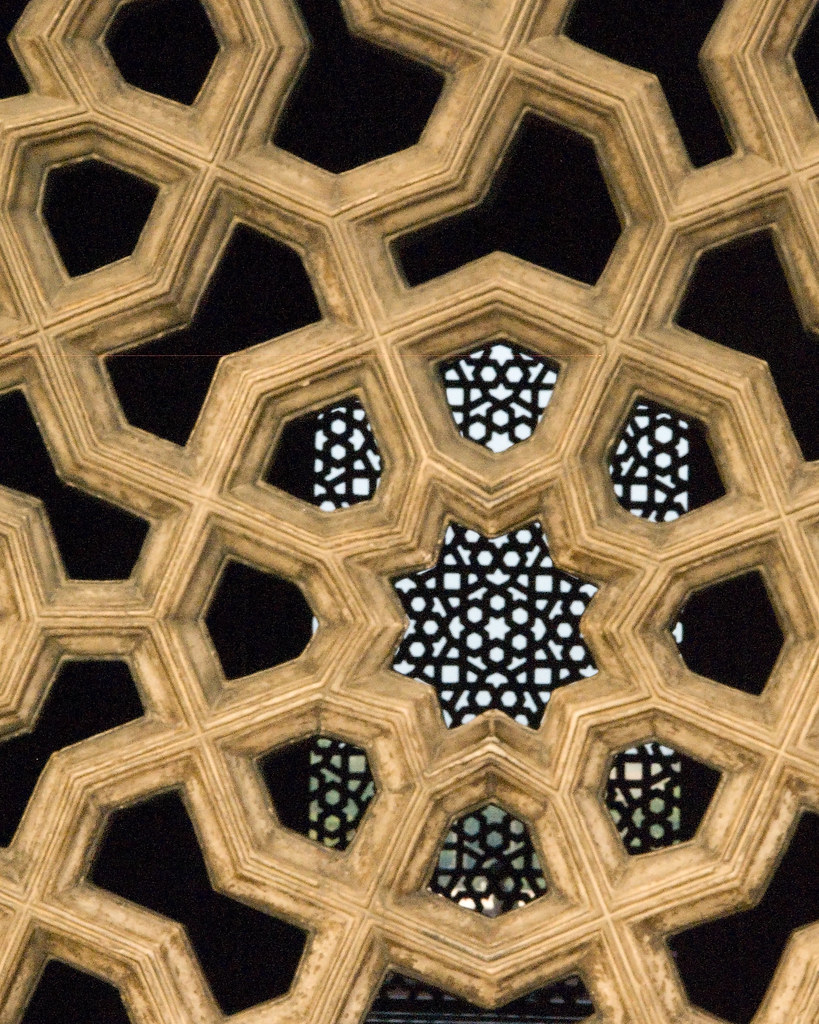
Detail from Hanuman's Tomb, in Delhi. It's a lot like the Taj Majal, except smaller and not as good, but three hours closer. Or rather, it's not really much like the Taj Mahal at all other than that they're both tombs in India.

Wednesday, November 09, 2011

India 9


The photo department has realized that our year of photographing everything in Hollavision has really paid dividends in our shooting-from-a-moving-vehicle skills. Lots of pictures from India that landed among our favorites were from the long drive from Delhi to Agra, or vice versa. Or perhaps the boredom of sitting in a car for a few hours led to a higher volume of photography, so discarding the standard 99% left more keepers after the cull.

In any case... how awesome is this totally highway-worthy tractor?!

Tuesday, November 08, 2011

India 8


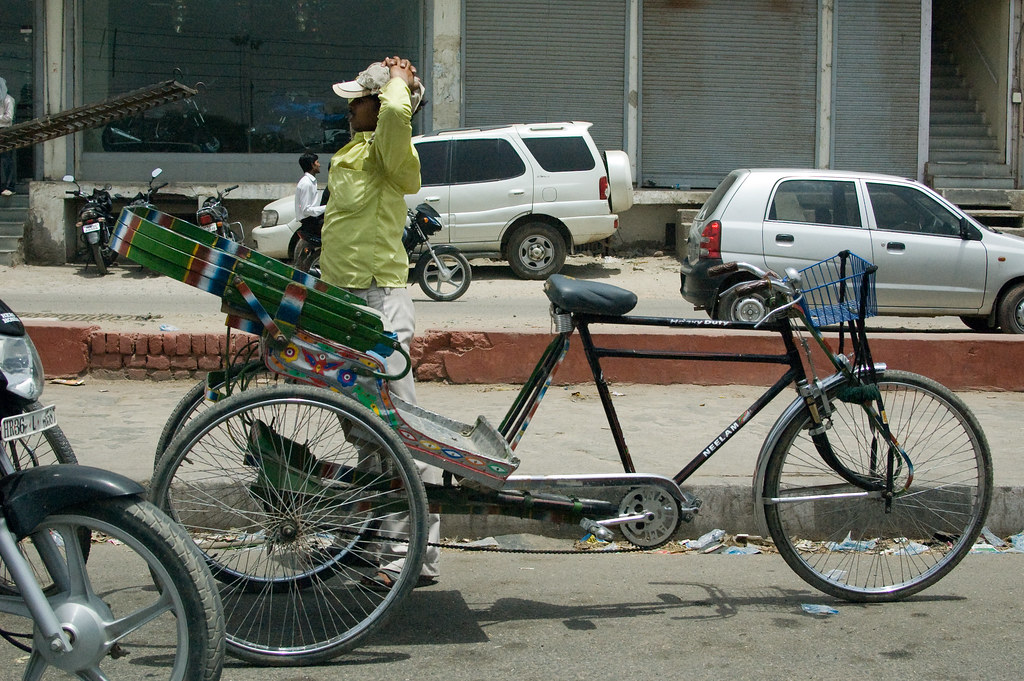
These three were all lined up along the side of the road as we drove by. After enjoying a couple pedicab rides in Nepal, we never did a pedicab in India, because hey: auto-rickshaws.

Monday, November 07, 2011

India 7


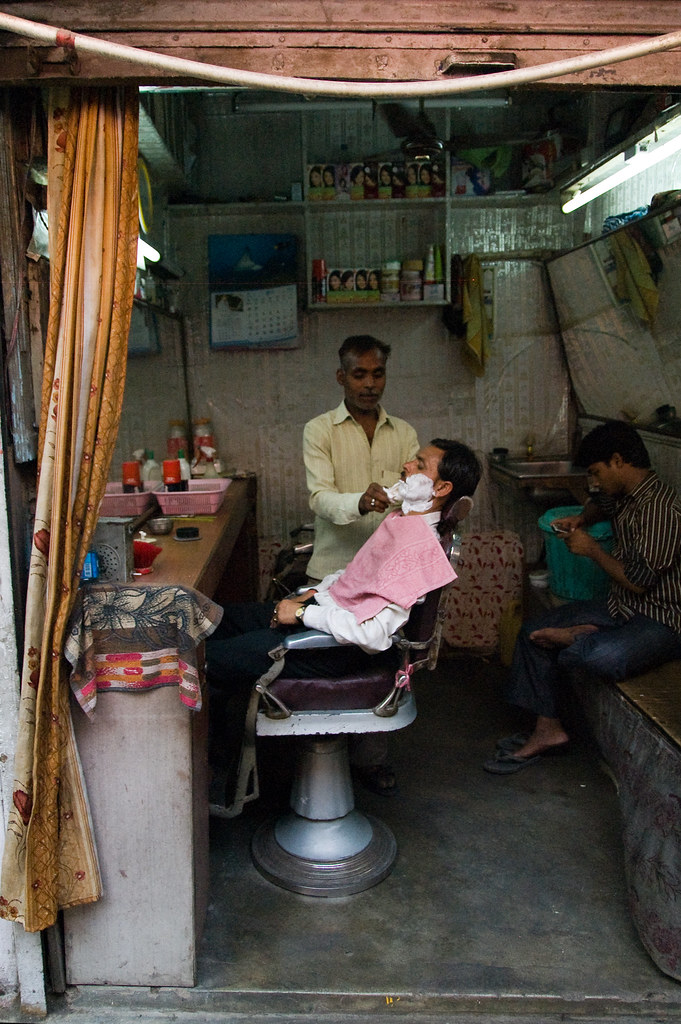
Despite the proliferation of options in the consumer wonderland of the U.S., I'm not totally sure I would know where to go if I wanted someone else to shave my chin-whiskers for me. I guess some old-fashioned barber shop might still do this?

Pictured above is actually one of the fancier barber shops we happened upon, what with the modest but serviceable space and the two actual barber-shop chairs. It seems that all one needs to be a barber in Delhi is ownership of a straight-back chair, a mirror, a pair of scissors, and a spot on the sidewalk. Which is fine - on a policy note (fret not: no foreign policy relevance), why should barbers have to be licensed by the government? The risk of a bad haircut seems like the kind of thing the private sector would pretty quickly take care of. Perhaps a relic of the days like the above when being a barber involved holding a straight blade to someone's throat?

Sunday, November 06, 2011

India 6


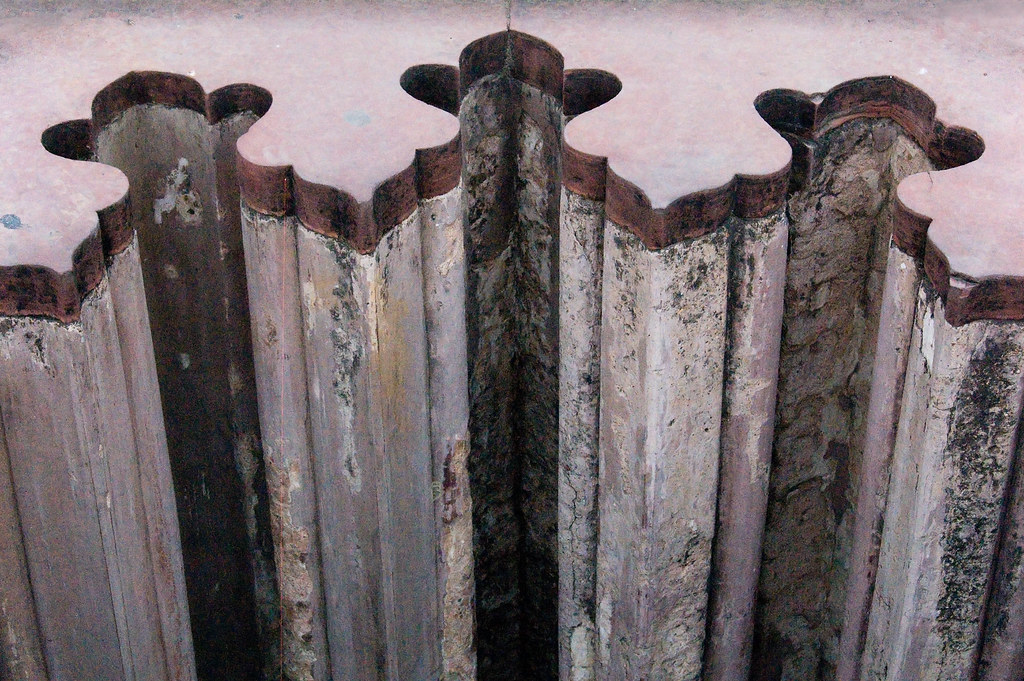
This is a detail from a fountain at one of the opulent palaces we visited. The Red Fort in Agra, we believe. But hard to say for sure.

With nothing further to add about that, I will note this: You know you have chosen to visit India in the hot season when the Indian newspapers have headlines about the heat and pictures of actual Indians who should be used to it mopping their brows and other such outward indicators of discomfort.

Saturday, November 05, 2011

India 5


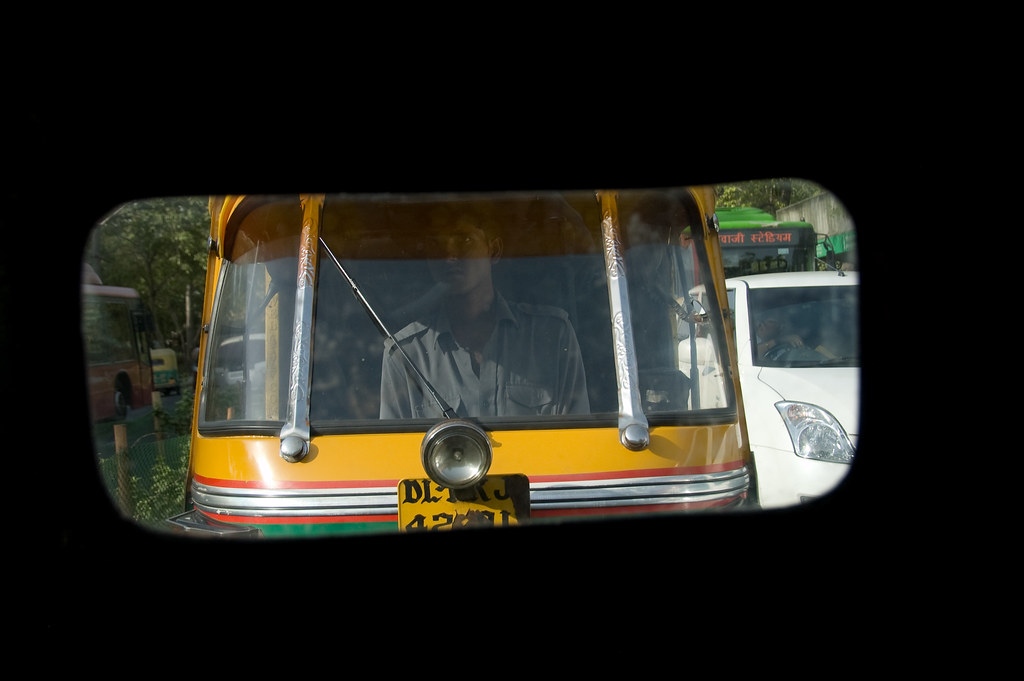
Your correspondents had always known what the Indians call an auto-rickshaw as a tuk-tuk, perhaps only because we visited Thailand long before visiting India. They are ubiquitous in Delhi. And, awesome. We zipped all over that city on a pittance thanks to the auto-rickshaw. Our hotels kept wanting to get us fancy closed-in air conditioned taxis, which we accepted on occasion. But cars? They suck when compared to the mighty auto-rickshaw.

Friday, November 04, 2011

India 4


As it turns out, we were in India over The School Holidays. It was never clear what this holiday was, but since the rest of the country seemed to be full-steam-ahead, I presume it was something like our Spring Break. Our hopes to take a train from Delhi to Agra were dashed by The School Holidays, which are an opportune time for the rapidly growing Indian middle class to take the family down to Agra. Our much more limited desire to take the bus? Likewise dashed.

As such, the confluence of two great forces aligned against us: First, the knowledge that it was entirely possible that despite our hopes to the contrary, we may never be so close to Agra again; and second, the temporary illusion that because we were earning Danger Pay and spending nothing in Kabul we were fabulously wealthy. I can assure you that our return to DC has scuttled any brief reverie that we were part of the 1%. But, by for that brief interval, that week, we were!

So we hired a private car and driver to take us down to Agra one day, stay there overnight, and drive us back to Delhi, via Fetapur Sikri, the next day. His price was ridiculously low for what we got. But it would not have been measured in the proverbial peanuts. Being a professional driver of tourists, we figured he would know his way around Agra, and be able to help us with such tasks as finding the Taj Mahal. We were mistaken! Some amount of driving in circles around Agra ensued, along with the asking for directions from random strangers.

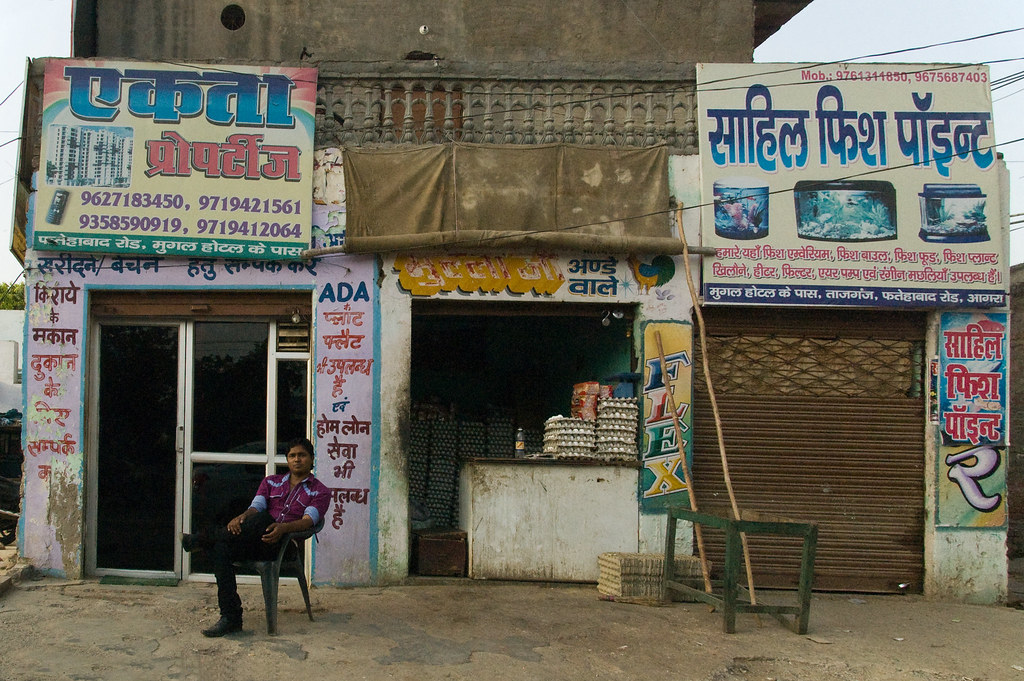
And thus, this kindly fellow, hanging out, selling eggs (we did not buy eggs) who was one of many who attempted to guide us to the elusive rooftop-cafe-with-a-view-of-the-Taj-at-sunset. I wish the photo were a bit straighter, but it was taken from the back seat of the car as the indolent staff photographer sat and took pictures and rolled his eyes about the hassles of navigating Agra, and he certainly wasn't going to get out of the air-conditioned car to improve the angle of the photo. The subject may have been the one who got us pointed vaguely in the right direction, but in the end we just told our faithful driver to drop us at some random street corner, found our way on foot, and took an auto-rickshaw back to the hotel that night.

Thursday, November 03, 2011

India 3


We spent a portion of our time in Delhi staying in the Haus Khaz neighborhood. We stayed in a fun boutique bed-and-breakfast, fairly near a hip up-and-coming patch of restaurants and art galleries. Just beyond the hip art galleries, a park opens up, beginning with these ruins. There's no entrance fee, no gate, and precious little interpretive information, but it turns out to be the tomb of a Sultan who died in 1388. We don't have a lot of truly old stuff in America. But even in Europe, it's unlikely that the neighborhood kids would be playing cricket on a six-hundred-year-old cultural site. Or even soccer.

Wednesday, November 02, 2011

India 2


Making no attempt to be chronological with regards to tales of India, we might as well start here.

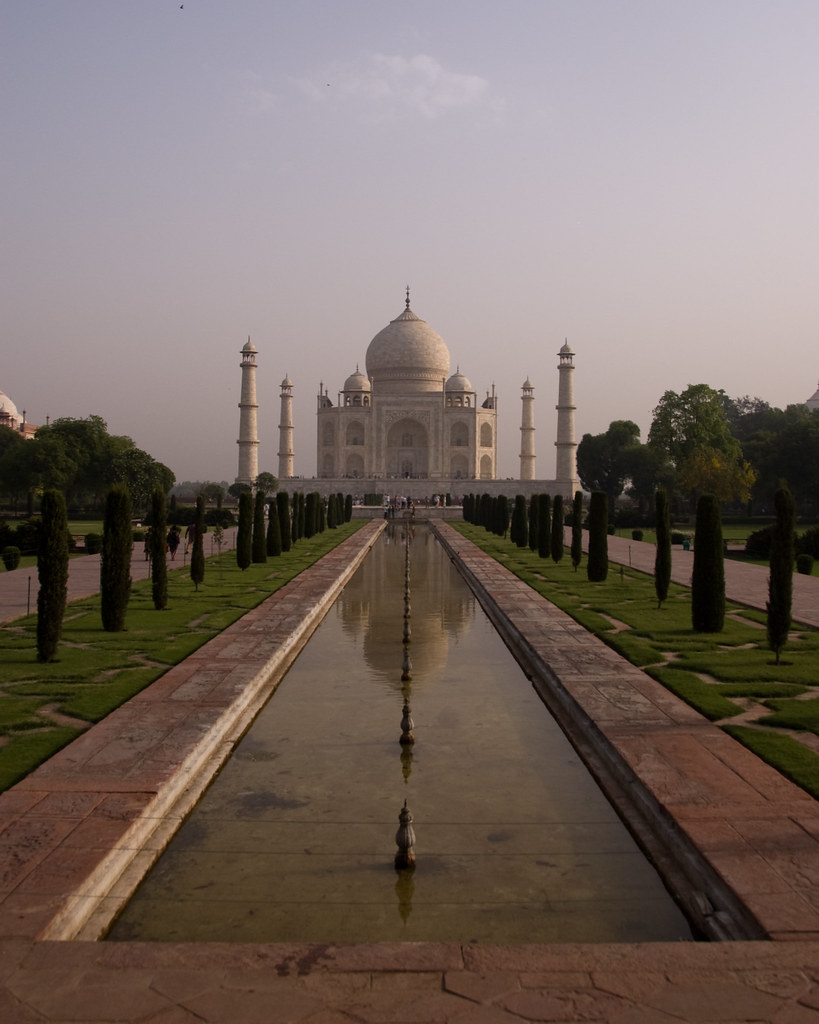
The Lonely Planet Guide to India (Which like many LP guides, is available for download as a .pdf on their website making it unclear why on earth anyone would purchase an actual hard copy of any Lonely Planet book - you can download and print only those chapters relevant to the parts of a country you will actually visit, or you can put all the searchable .pdfs you want on your laptop or smartphone or something else you might bring with you. Great Stagnation, indeed!) says that many of the world's most famous sites are so overhyped, and so frequently seen in photographs, that they may fall a bit flat in person. The LP guide goes on to say the Taj Majal is without a doubt not one of those sites - one can't fail to be awed.

We failed to be awed. That may be too cruel: It was lovely, it was majestic, it was everything promised. But perhaps the very reading-ahead of the Lonely Planet promise that the Taj would not fail to awe set up an impossible standard, and in the end, a certainty that it would fail to awe. We should be so lucky to test this theory with all the world's over-photographed monuments.

Tuesday, November 01, 2011

India 1


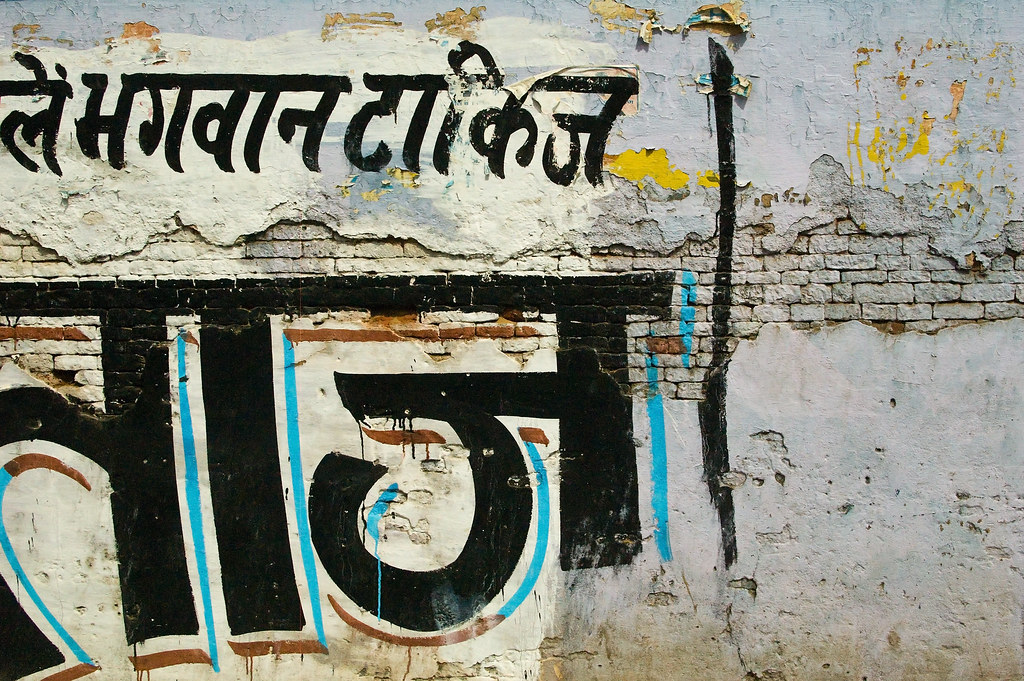
We were only in India for a week. So it shouldn't be that hard to boil it down to 30 pictures. The photo editor is apparently getting soft, and some less-than-top-shelf photography is getting through. Maybe the picture above, from somewhere on the road between Delhi and Agra, is an example. It won't make anyone say "wow," but we like the textures and the bricks showing through the plaster and the spots of yellow and the dripping black. But anyway, following on the heels of The October of Nepal Pictures, we now present The November of India Pictures. Enjoy!

Monday, October 31, 2011

Nepal 30


Last picture from Nepal. Waiting out a downpour under the eaves.

Can't recommend Nepal enough. Great scenery, great history, great mountains, great people. We could probably do another month of pictures from Kathmandu and have probably already forgotten a few anecdotes that would have been fit for inclusion here. Perhaps if we remember, one day we'll add them here.

But in the meantime, starting tomorrow: India!

Sunday, October 30, 2011

Nepal 29


Our last day in Nepal, we made a morning visit to Swayambhunath, better known as the "Monkey Temple." It is perched high on a hill relatively near the center of Kathmandu. The Monkey Temple name derives from the hordes of rather bold monkeys that live there and harass visitors. Sadly, we survived our trip with no monkey-related incidents to relate.


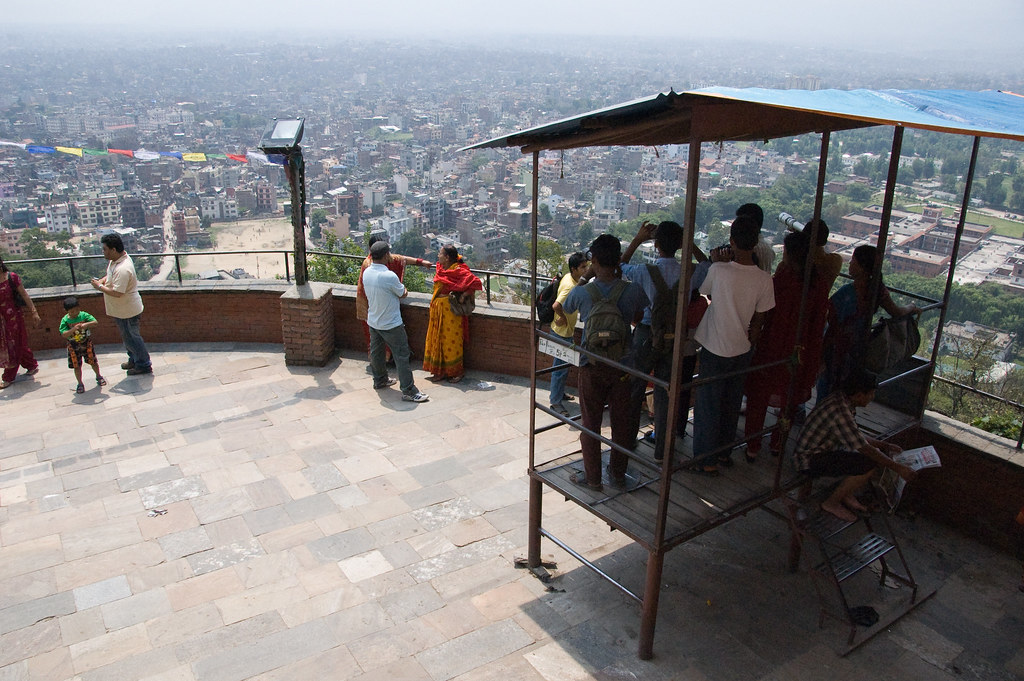
The crowd at the temple seemed to be majority local, despite the World Heritage Site status and ease of visiting the site from the backpacker ghetto in Kathmandu. There were lines of people having various offerings blessed or burned or just left in strategic offering locations. And for those who found the view from the hilltop insufficiently impressive, you could pay a few Rupees to climb this platform for an additional meter of altitude. (Being honest, I think payment for platform entry also entitled one to use of one of several pairs of binoculars to try to spot your house in the hazy distance.)


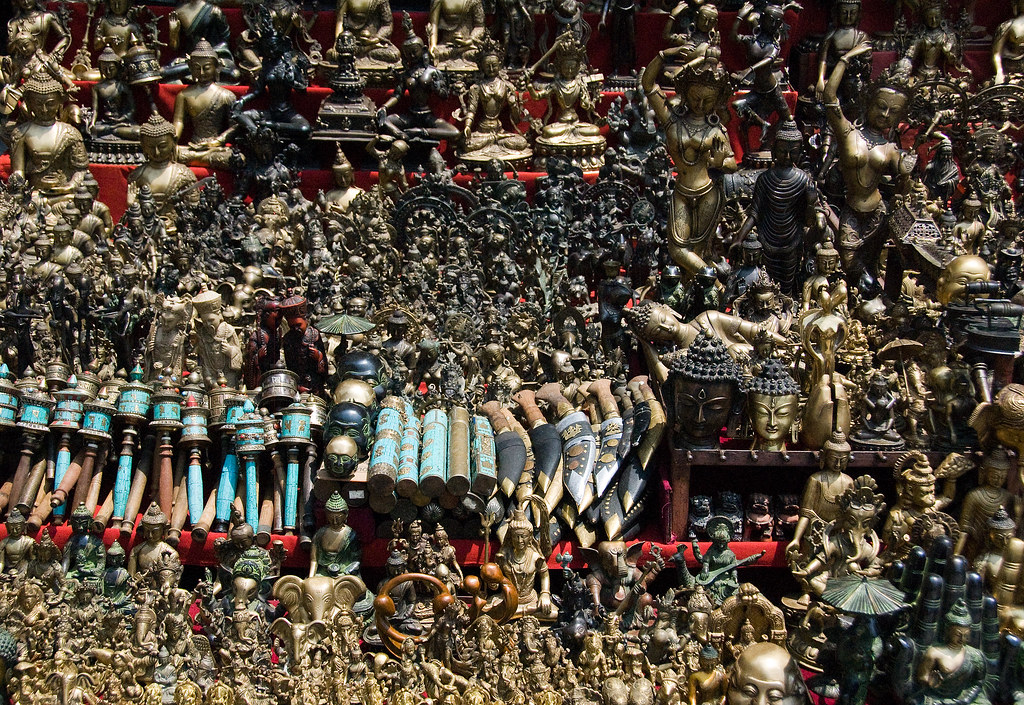
Also: retail opportunities!

Saturday, October 29, 2011

Nepal 28


The second stop on our bike tour was the Hindu holy site of Pashupatinath. There is a complex of temples there, but non-Hindus aren't allowed into the primary site. We were allowed to go see the cremation ghats where they burn the remains of Hindus on the banks of the holiest river in Nepal. Apparently, this is a big tourist attraction, or at least all the touts wanted to take us there. We saw the ghats, smelled the smell, and did not actually see a cremation happen, which I'm sure was a great loss for us but one we were willing to accept and move along.

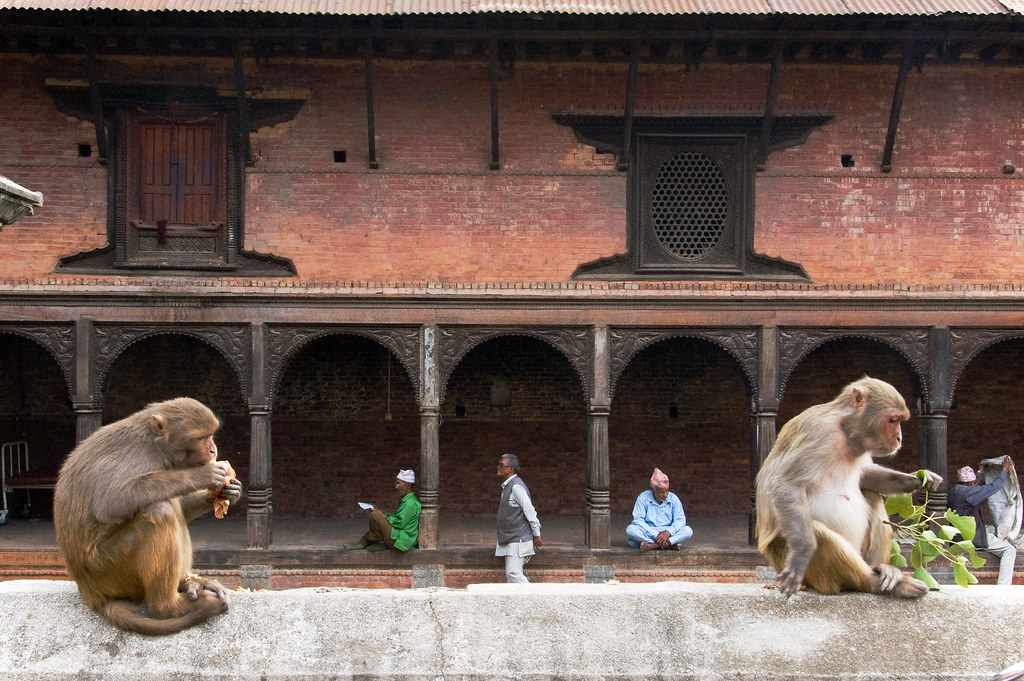
Pictured above, an associated retirement home, which sadly did not place its second-floor windows in spots that line up symmetrically with the retirees and monkeys below.

Friday, October 28, 2011

Nepal 27


One of our stops on our bicycle tour was Bodhnath, site of the World's Largest Buddhist Stupa or some such. Which I guess is sort of like having the World's Largest Fourth-of-July Rodeo. There can't be that much competition, but nonetheless, the stupa at Bodhnath is huge. Maybe 75 yards across? Pilgrims come from distant lands to walk around it, and I suppose they had to make it big enough to make it worth the trip.

But we didn't like any of our pictures of the pilgrims or of the stupa as much as the picture above, of a vacant lot nearby. (One monk at one of the attached monasteries chatted with the staff photographer for a while, and then asked to have his picture taken, inspected the results, and suggested, "Don't you think it would be better if you used the flash?" He was right, but even the second attempt, with fill flash, wasn't so great, so the picture of a brick wall wins.)

Thursday, October 27, 2011

Nepal 26


So with our full day back in Kathmandu, we decided it would be a great idea to rent some bicycles to get around to all the sites. Stay on street level, get some exercise, &c. &c. So after some touristing, we rent some bikes just before the shops closed (in order to use them the next day) and ride them back to our hotel before dark - through city traffic. It was one of the more difficult/harrowing bike-riding experiences I can recall, up there with biking "the World's Most Dangerous Road" in Bolivia. There were some creeping doubts that this may have been one of the stupidest decisions we had made in some time. Way worse than the decision a couple days previous.

And then, the next day, as if by magic, there was a one-day automobile strike. In some constitutional standoff, some opposition group had declared the general strike demanding that, as a demonstration of solidarity, nobody drive. This was occasionally enforced by citizen roadblocks, but they seemed only barely necessary because it was very widely observed. I don't know if we would have been able to catch taxis even if we had wanted to. So we cruised around the streets of one of the more chaotic and traffic-choked cities of the world, traffic free. It was fantastic.

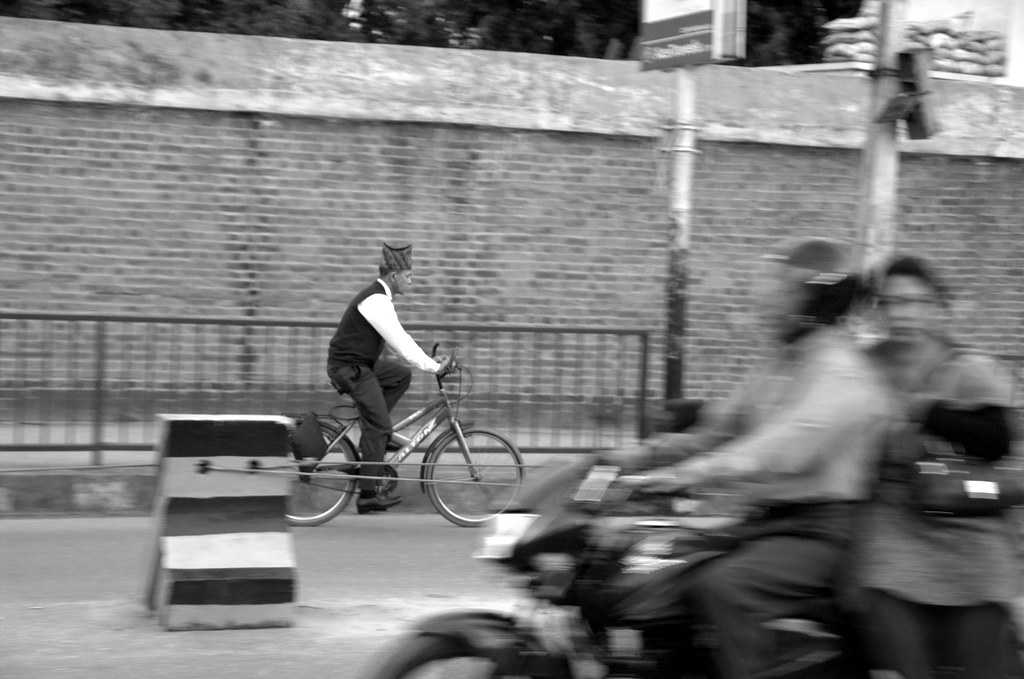
We took advantage of the empty streets to make our way to three UNESCO World Heritage Sites in the Kathmandu region, about which, more tomorrow. Pictured above, someone else on a bicycle, for those not familiar with this foreign technology.

Wednesday, October 26, 2011

Nepal 25


Meanwhile, back in Kathmandu...

We returned and had a couple previously scheduled days for exploring Nepal's capital, which is certainly one of the world's best for wandering around aimlessly and finding interesting things by chance. Temples and shrines abound, as do colorful characters, old guys in charming hats, occasional sadhus (which the Holla Style Guide could have sworn was "saddo", until attempting to check the spelling on a moment ago and finding the wikipedia definition: "Saddo: A pathetic or socially inept person." Anyway...), &c. &c. &c.

Above from a candelabra thing in one of the countless courtyard temples we visited. Wish we could recall exactly which.

Tuesday, October 25, 2011

Nepal 24


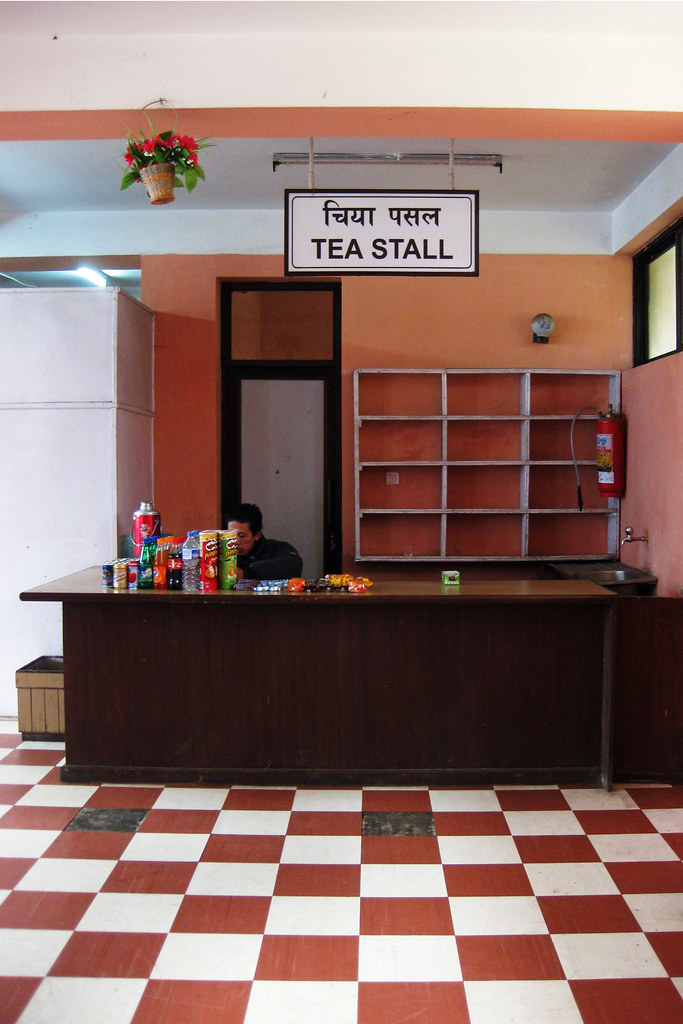
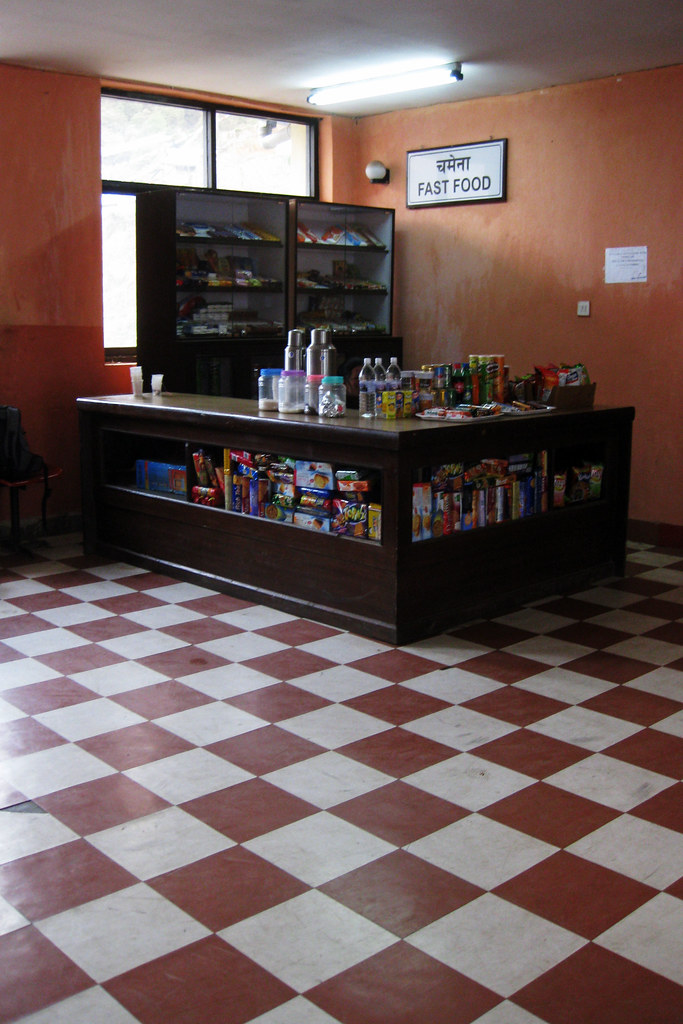
We present now, in two photos, the sum total of the dining options at the Lukla International Airport. The airport is surprisingly crowded, in large part because there is a brief window each morning when flights in and out are possible, and they squeeze as many landings as they can in that time. Despite the crowd, I never saw any customers at the "Fast Food" bar or the "Tea Stall."

Monday, October 24, 2011

Nepal 23


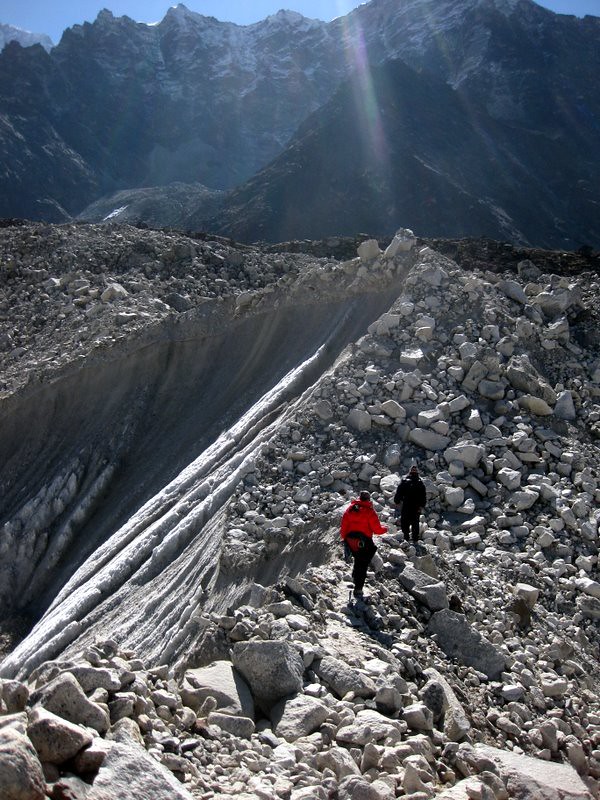
On our way back down the trail, we (being way more bad-ass than most hikers on the trail) asked if we could do a side-trip up and over one of the high passes. Our guide, exhausted by all his work not explaining things along the trail, was not thrilled, but eventually agreed to show us the way over the Kongma La pass.

The day started inauspiciously. We were not 100% certain our guide actually knew where he was going, and the first step of the day was walking across the Khumbu glacier. As you may or may not be able to tell from the picture above, the glacier here is mostly covered with rocks and scree. But the ice below is always shifting so the terrain is uneven and things that looked stable can slide into sinkholes at a moment's notice. The guide sort of seemed to know a path across, but he didn't seem to have any sense at all that there was any danger at all. Above, The Lovely Katherine and said guide cross a narrow path between a very deep sinkhole to the left, too steep for rocks to collect on the ice, with a pond of certainly extremely cold water at the bottom. To the right, less steep but certainly no fun to fall down. And as we were walking we could often hear and sometimes see small ice- and rockslides crashing into just such holes. So in this case, your correspondent stopped to watch the other two cross so that if it did fall at least one of us might not go with it and be able to mount a rescue. Impossible to detect from a picture is The Lovely Katherine telling the guide to hurry because it didn't seem very stable and the guide literally stopping, turning around, and asking her "What's that, do you want to go faster?" Anyway, we made it across unscathed, although we did witness a huge (perhaps fifty feet across?) slab of ice collapse on the opposite side of this sinkhole once we were safely resting on solid ground on the other side of the glacier. People do this walk all the time without (as far as we know) incident, so maybe we were just paranoid, but it did seem like we were rolling the dice a bit more than we bargained for on this one.

Once across, we climbed the Kongma La. This was a fair bit more strenuous than any of the standard days on the Everest Base Camp trail. Not surprisingly, it was also a lot more peaceful. We saw one other group of two coming over the pass the opposite direction, and other than that, saw nobody, which is a pretty good day in such a heavily touristed region. The pass at Kongma La is supposedly 10 meters lower than Kala Patthar (or exactly the same, depending on who you listen to). Your correspondent decided it couldn't be that hard to just scramble up the saddle another 10 meters. It was harder than he thought, but reliable estimates indicate he bested the more commonly climbed Kala Patthar summit by at least two to four inches.

Sunday, October 23, 2011

Nepal 22


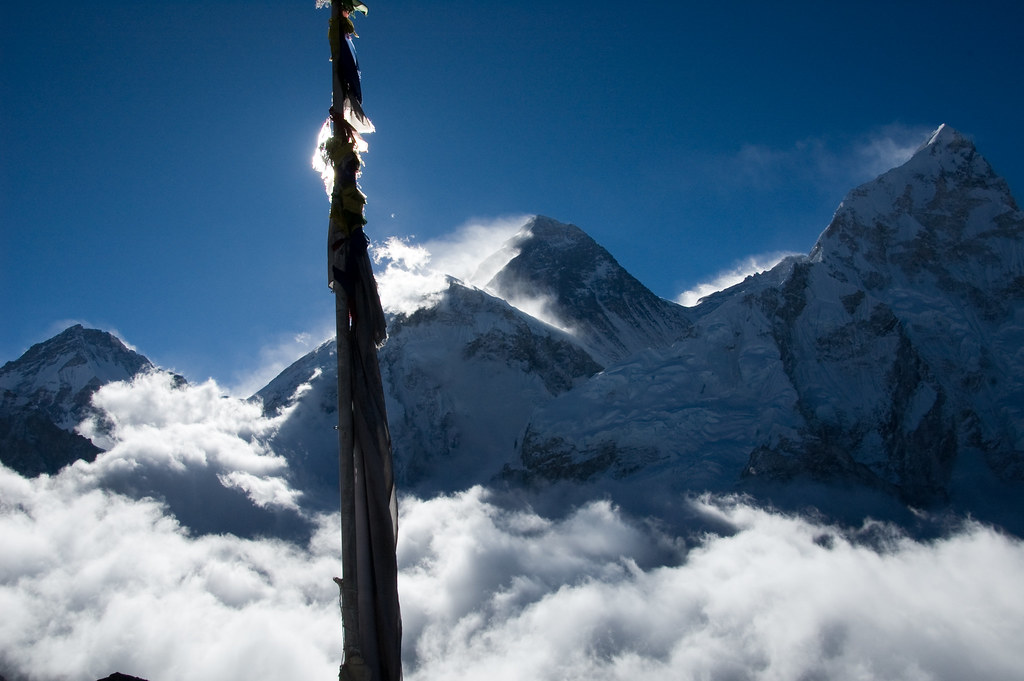
Everest!

It's actually the one in the center. Nuptse, on the right, is much shorter but may look taller because it's closer. The sunrise climb of Kala Patthar was great, but you do wind up with the sun coming up directly behind Everest, which makes the photography a little tough unless you want to haul a bunch of crazy filters up the mountain for that one picture. We opted to use this conveniently placed prayer-flagpole thingy instead.

Saturday, October 22, 2011

Nepal 21


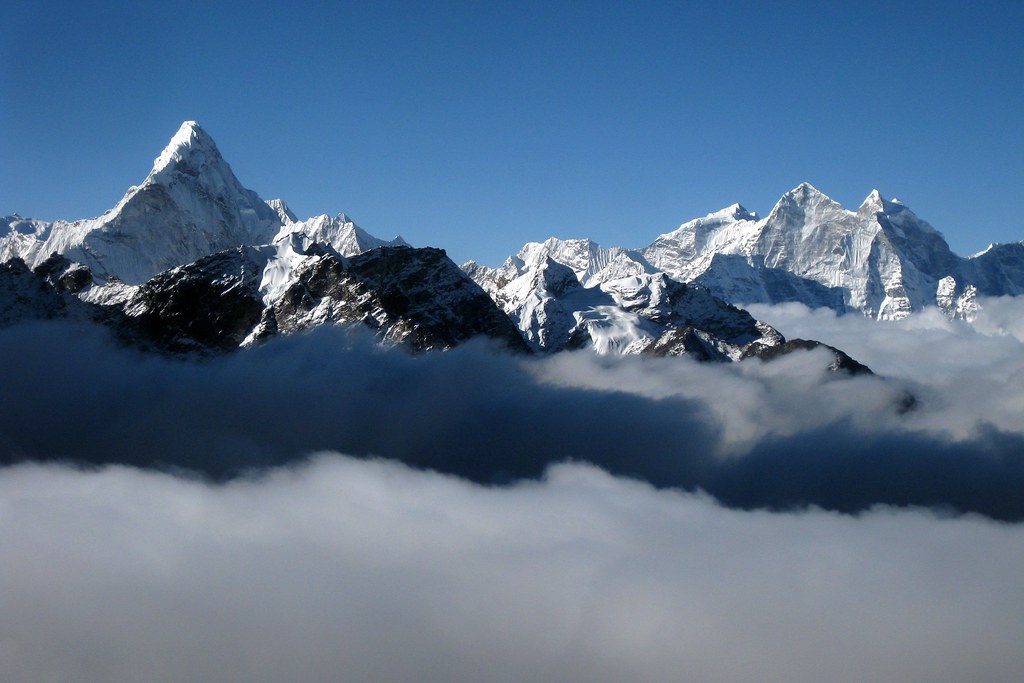
Two views from the top of Kala Patthar, the highest point most trekkers reach, at more or less 18,500 feet. It's about the same elevation as Everest Base Camp. The base camp is the furthest one can proceed without ropes and crampons, and has great views of the Khumbu Icefall, the most treacherous part of the ascent of Everest. But the views are better from Kala Patthar, as photos above and below attest.

Friday, October 21, 2011

Nepal 20


Monks at Tengboche.

Thursday, October 20, 2011

Nepal 19


Continuing up the trail after Tengboche, we made our way to Pangboche, site of another monastery. The view from within the monastery courtyard was incredible. And unphotographable with the equipment the staff photographer was carrying.

The courtyard was being re-built, and was unpainted wood. A balcony wrapped all the way around. On one side, a door passed into the temple (as seen a couple days ago). In the center of the courtyard, an older guy burned some sort of censer, filling the courtyard with smoke. On one side, lined up along the balcony, six or so monks chanted the same sort of variable-speed Muppet songs mentioned yesterday. The head monk, pictured above, did various bell-ringing and feather-waving rituals. Towering above them was Ama Dablam, a huge, knife-like peak. It was gorgeous, in full, beaming sunlight.
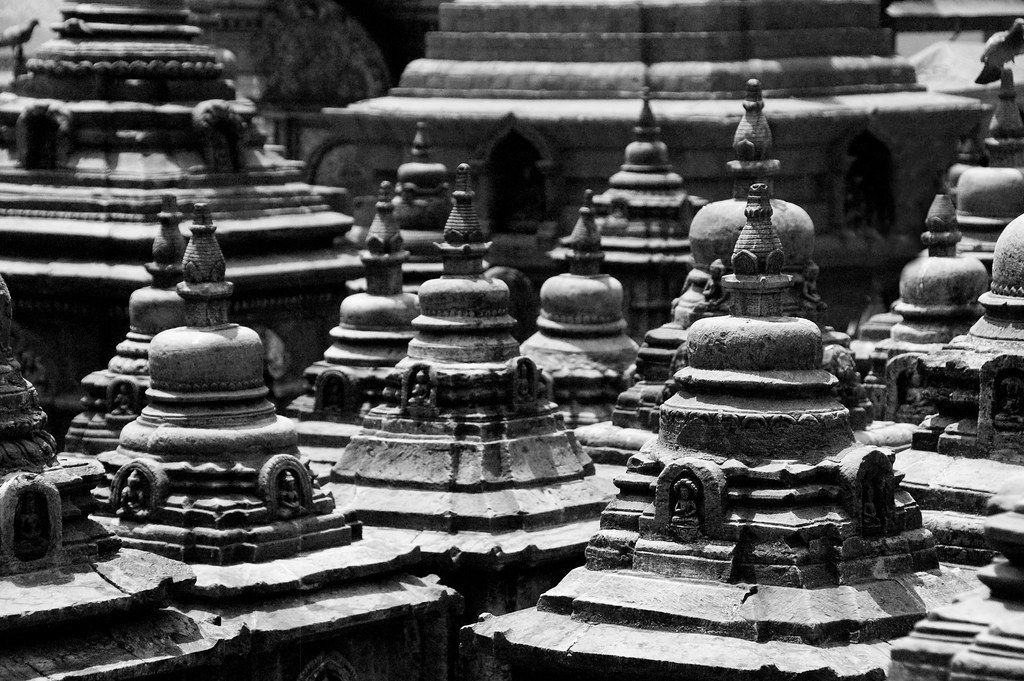
Sadly, the monks were in full, gloomy shade, with incense smoke adding to the haze. We made some attempts to capture the scene, but they're just not worth showing here. So, instead, we offer the above detail. Sorry.

Wednesday, October 19, 2011

Nepal 18


One of the legendary spots on the way up to Everest is the Tengboche Monastery. Positioned on a fantastic little saddle ridge featuring distant views of Everest (Tengboche being the only time in 10 nights in plywood hotel rooms on the trail that we had a view of Everest from our window), the monastery could be a notable tourist attraction even in a less distinctive location. Instead, it's here, only accessible by foot, a short day's walk from the nearest place you could conceivably land a plane and several days' walk from the nearest actual airstrip.

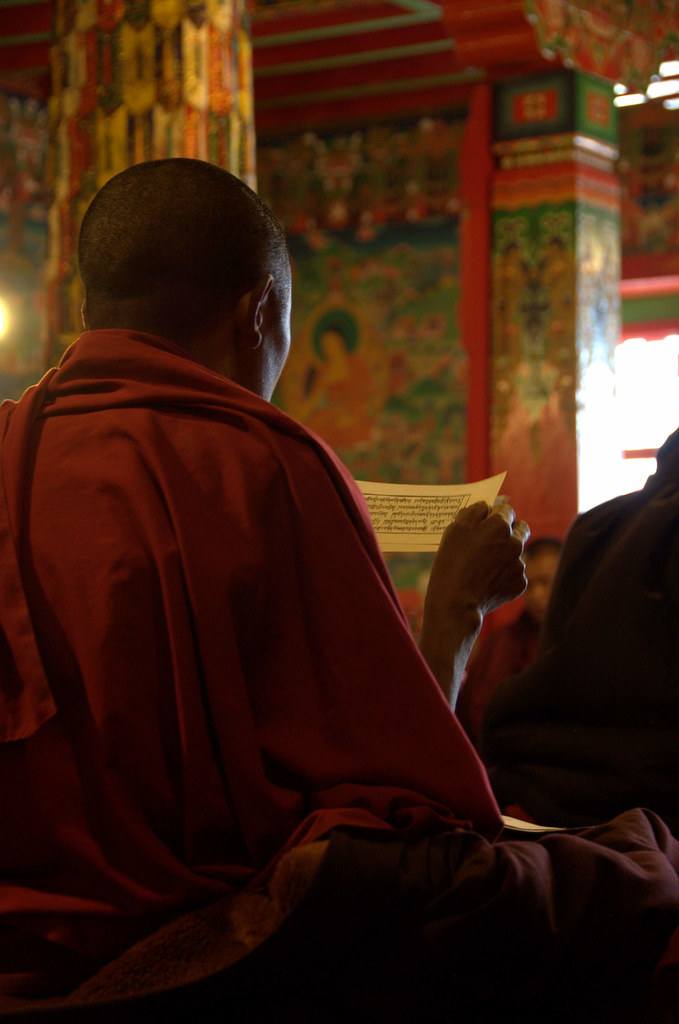
We arrived there and had much of the afternoon to kill. We figured at some point we'd need to check out the monastery, and wandered in to find the monks in the middle of prayer, which it turns out happens often but not constantly. Maybe all you students of eastern transcendentalism already know this, but it turns out that the monks at a monastery get together and chant. The head monk, I gather, is leading the chants, and the words change from time to time. The chanting sounds like if you took a 45 RPM record of Muppets songs and then and played it at 33, and then used a finger to randomly speed it up every now and again. And then, all of a sudden, all the monks pick up random musical instruments and make AS MUCH NOISE AS THEY POSSIBLY CAN for a half a minute or so. Then they go back to chanting. It's way more awesome than any singing I have seen at any other religious gathering.
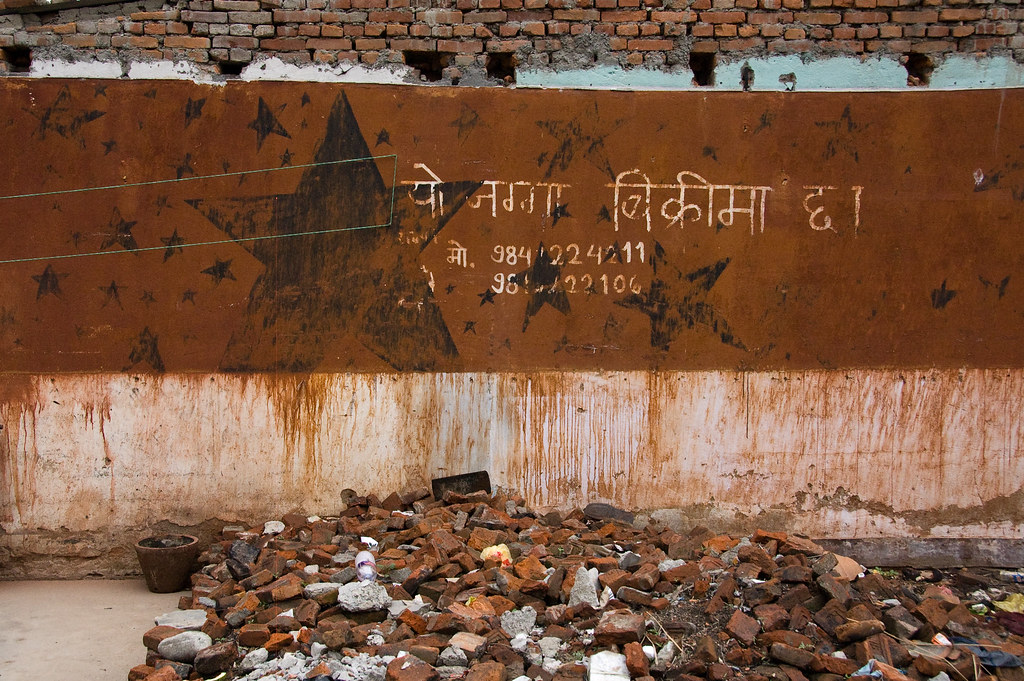
In any case, here's a picture of one of the back-bench monks who was just in front of us, with his crib sheet for words to the latest chants.

Tuesday, October 18, 2011

Nepal 17


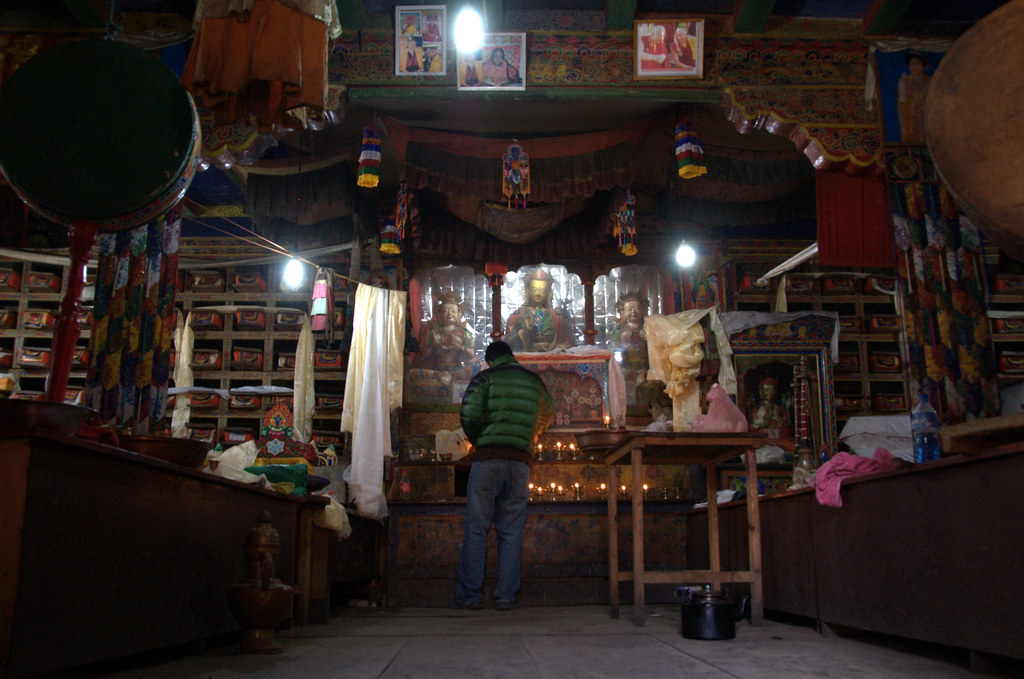
Continuing our kick of various Buddhist stuff along the trail to Everest, this is the interior of the temple at the Panboche Monastery. We will make no attempt to explain any of the stuff inside the temple, in part because our trusted guide and cultural interpreter who we hired at some expense revealed once we were on the trail that he was in a one-year period of mourning and could not enter any of the temples. Not that his presence would have made too much difference, but there is a lot going on in these places.

Monday, October 17, 2011

Nepal 16


Another view of a prayer wheel. If you turn it the wrong way, you may never get the knife.