As previously alluded to, we tried to take advantage of the last weeks of summer by heading to the beach this weekend. And none too soon. The rainy season officially started yesterday. It has rained here in the last month, but occasional sprinkles are not Official Guatemala Rainy Season Cloudbursts, which is what we got yesterday afternoon, and again this evening.
The staff photographer was punished for his profligacy with the Holla budget the week prior and not invited, so the event has not been recorded. But the ratio of grown-ups to pipsqueaks on the trip was 8:7, a hairs-breadth victory for maturity in terms of numbers, if not in terms of weight. The other three couples we went with are all of the Foreign-Service-as-child-care-opportunity school of thought. One couple brought their six-month-old girl, who is thankfully one of the more chill babies I've had the pleasure to meet. Which led not only to me besting my personal baby-holding record, but shattering it, the result of an surprise pass by the doting father, mostly so he could reach the chips and guac we were enjoying at poolside. Anyway, in case my mother was wondering why her psychic state inexplicably improved drastically from 6:36 to 6:42 on Saturday night, it is because I was holding a baby and not trying to get rid of it for a whole (estimated) six minutes. Previous record had been however long it takes to hold a baby and say "she's cute" and then pass it on to the next cubicle-dweller.
Just so nobody's hopes swell too much, it's a record I'm certain will stand for many years.
Tuesday, April 25, 2006


Monday, April 24, 2006
Much Delayed Semana Santa Report
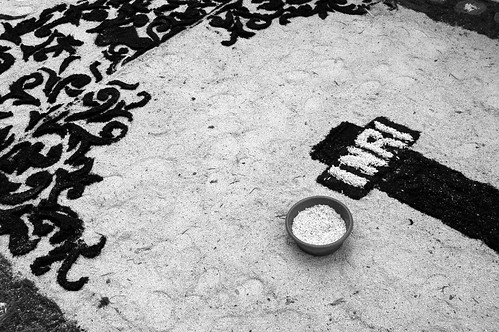 The photo department finally got through editing all 500 pictures down to a brisk 85 or so and getting them on-line, just in time for the editorial staff to make a hasty end-of-"summer" trip to the beach. We know that our loyal readers are sitting at home on Saturday nights hitting "refresh" on the Holla website every five minutes waiting for news. So, we apologize, and will forgo our usual lengthy introduction and cut to the equally lengthy chase.
We had heard that the crowds in Antigua were unbearable for the Semana Santa (Holy Week) processions, and were almost ready to skip the whole thing. But we figured it was worth a try, and if we couldn't find anywhere to park we would just turn around and head home. Lucky for us, the rumors of unbearable crowds were greatly exaggerated.
On Thursday afternoon and evening, and Good Friday morning, we wandered around the town, seeing how they make some of the less elaborate alfombras and seeing a few parades. "Alfombra" translates as "carpet," and refers to the elaborate decorations that the local residents build on the cobblestone streets in front of their homes and businesses. It is a painstaking process of collecting bushels of flower petals and seeds, arranging them in elaborate patterns, outdone only by the even more elaborate and intensely colored sawdust artworks. The ones we saw on Thursday were mostly pretty basic, but on Friday morning they were incredibly intricate, often the work of the entire night by a team of laborers. Each alfombra is then trampled by a parade. There must be some sort of symbolism there.
We managed to catch three parades, which ostensibly had scheduled stops around town, though they were best thought of as a rough suggestion of the route rather than a real timetable. Each parade follows a fairly standard pattern:
1. The Roman guards. Sometimes on horseback.
2. Guys in the purple robes start lining the street, then guys with censers of incense amble through, accompanied by guys in non-purple robes. For the Good Friday procession, the sea of purple robes was particularly thick. These guys mostly just stand around -- they may carry special poles that lift power lines out of the way of the very tall sculptures to follow, or may just be waiting their turn to carry the sculptures. In fact, you see people of all ages running around in purple robes all over the place, all day.
3. An anda featuring Jesus carrying the cross. An anda is like a giant sedan carried by sixty or seventy people, half on each side. Nobody I know has been able to come up with an equivalent word in English -- since "float" generally conjures images of the goofy Rose Parade floats with animatronic dinosaurs and whatnot.
4. A marching band
5. Anyone who feels like joining in the parade for a bit, mostly apparently very devout elderly folks.
6. Some other random folks on little four-person andas. Maybe if I'd been to a bit more church in my day, I could tell my Mary Magdalenes from my Josephs and John the Baptists.
7. Mary, carried by women, all in black veils, probably because the ladies wanted something that they would be able to wear again, unlike the purple robes.
8. Another marching band.
9. Cleaning trucks, backhoes, etc.
10. Everyone else in the world, selling all manner of food and toys.
The processions were as spectacular as billed (book now for Semana Santa 2007), even without the main event, which is the candlelight procession on Friday night. Instead, we shot up to Lake Atitlan, where a friend was working as a volunteer at a medical clinic in the small town of San Lucas Toliman. The big bonus of this was the extremely friendly family she was staying with that allowed us to -- or perhaps begged us to -- help build the alfombra on their street. The San Lucas processions were on a smaller scale, with far more indigenous flare and far fewer tourists, but the alfombras were still impressive and the joy of seeing our own work trampled brought us closer to to the event. We saw Jesus taken down from the cross in the local church, and had an amazing view from the bell tower as his body was led out for the final procession of the day.
One interesting note in Toliman was the local version of Maximon (whom faithful readers may remember) was hanged from the church, apparently because one of the many figures mixed into his composite character is Judas.
It turns out that nothing actually happens on Holy Saturday -- it's mostly just a day for fun with the family between the processions of Good Friday and the churching up of Easter Sunday. There were lots of families at the lakefront, and a mini-carnival with food stands and midway games in the main square. We spent the day wandering and allowing the staff photographer to play with his new toys.
Unsurprisingly, Sunday is all about church -- though there is one last procession (I hear it features the empty coffin coming back to the church, although your correspondent was unprepared for the early start required on Sunday morning to see it). But life also seemed to be back to normal, with things feeling a little sleepy. Maybe everyone was in church, or maybe your correspondent wasn't the only one with a hangover, or most likely, both.
Wednesday, April 19, 2006
Photo departement incapacitated by new photo technology
When first we began this adventure in Guatemala, an anonymous donor suggested that perhaps we would like a nice new digital camera to help the photo department appropriately document the strange and exotic culture. We demurred -- if you read the State Department warnings, it looks like the second you walk out the door with anything with more resale value than the day's newspaper some young ne'er-do-well will be robbing you at gunpoint and probably shooting you afterwards just for kicks. Your correspondent would like to state officially and for the record that anyone coming to Guatemala should seriously consider the risks and should take the State Department travel warnings seriously. That said, we relented in our objections to said anonymous donor providing the photo department with a snazzy new camera which has seriously hampered our reporting efforts.
The camera takes fantastic pictures, and has a ridiculous amount of storage capacity. As such, there was nothing to stop the photo department from taking nearly five hundred pictures over the four-day Easter weekend. The features editor is ready to go to press, but really the story of Semana Santa in Guatemala is all about the visuals, and editing five hundred pictures is taking longer than the photo department anticipated. We can only pledge to the reading public that the full story and photos will be published in the next couple days and will be worth the wait.
The camera takes fantastic pictures, and has a ridiculous amount of storage capacity. As such, there was nothing to stop the photo department from taking nearly five hundred pictures over the four-day Easter weekend. The features editor is ready to go to press, but really the story of Semana Santa in Guatemala is all about the visuals, and editing five hundred pictures is taking longer than the photo department anticipated. We can only pledge to the reading public that the full story and photos will be published in the next couple days and will be worth the wait.
Saturday, April 08, 2006
Passing the torch
As I advance in my Foreign Service career, there comes a time for reflection. It's been a long eight months, and I'm not sure I can keep up this pace. There are youngsters out there with more energy and more desire than I can muster anymore. The creeping onset of career senesence is upon me; time waits for no man; none of us is getting any younger.
So it was that I served as the administrator for the Foreign Service Written Examination here in Guatemala, where a crew of ex-pats (mostly Peace Corps) took the first step towards getting hired for my job. Not the best way to spend a Saturday, but it earned me a full day of comp time which I can use to turn some made-up-Guatemalan-holiday three-day weekend into a four-day weekend. Mostly it was a day of sitting and staring and occasionally checking the clock, as the proctor is not allowed to pass the time reading, which would just open the window for skulduggery among those hoping to usurp me. Weary is the head that wears the crown. Weary but watchful! The most unsettling part of the experience was when 15 of the 17 examinees had finished a given section of the test, and were not allowed to read, either, so we just sat there and stared at each other for ten minutes until the time expired on the two slowpokes. Perhaps we should have just gone ahead and had a staring contest -- winner gets to do 100 visa interviews on Monday.
So it was that I served as the administrator for the Foreign Service Written Examination here in Guatemala, where a crew of ex-pats (mostly Peace Corps) took the first step towards getting hired for my job. Not the best way to spend a Saturday, but it earned me a full day of comp time which I can use to turn some made-up-Guatemalan-holiday three-day weekend into a four-day weekend. Mostly it was a day of sitting and staring and occasionally checking the clock, as the proctor is not allowed to pass the time reading, which would just open the window for skulduggery among those hoping to usurp me. Weary is the head that wears the crown. Weary but watchful! The most unsettling part of the experience was when 15 of the 17 examinees had finished a given section of the test, and were not allowed to read, either, so we just sat there and stared at each other for ten minutes until the time expired on the two slowpokes. Perhaps we should have just gone ahead and had a staring contest -- winner gets to do 100 visa interviews on Monday.
Agua
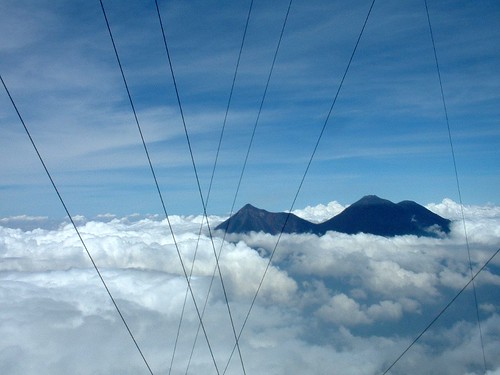
Perhaps they betray the lack of creativity of the Spanish conquerors who generally used the crutch of saints' names for their prosaic place-names; or perhaps there is simple poetic grace in their straightforward names. In any case, the volcano near Antigua that used to have a lake in its crater is called Agua (water), and the one that is still actively spewing lava is called Fuego (fire). Pretty clever. While Fuego gets all the attention when it occasionally showers Guatemala with ash, it is the now-waterless Agua that dominates the view from Antigua, and to a lesser extent, from Guatemala City.
(The water in the former crater lake atop Agua rushed out in the last eruption, hundreds of years ago, and destroyed the first Spanish capital, now known as Ciudad Vieja (Old City). This prompted them to move the capital a few miles over to Antigua, which was leveled by an earthquake practically the next day, so they moved the capital another twenty miles to what is now Guatemala City. Guatemala City has since been more-or-less leveled by subsequent earthquakes, but they'd apparently grown weary of moving the capital down the road a spell by the time that happened. "Ciudad Antigua" means "Ancient City," even though the merely "Old City" is actually older. It's a country filled with mysteries.)
Having taken enough taunting from its looming presence, I climbed Agua yesterday. (The photography department has informed us that our cliché-averse staff photographer is the only person to ever go to Antigua and not come back with a picture of Agua towering over the quaint colonial architecture. He has been put under the lash. For now, here's a picture from some other random guy.) Your correspondent was accompanied by five of the other fine gentlemen who represent the United States in this fair country, including one American Diplomatic Security guy and accompanied by a Guatemalan National Police officer who is assigned to the Embassy beat, each of these two "packing heat" but inexplicably unwilling to shoot their guns off into the sky at 12,336 feet. Maybe due to the effects of altitude, the DS agent forgot we were in Guatemala. I don't know what the Guatemalan's excuse was.
The climb was not actually that painful, in part because your correspondent's SUV-owning colleagues were able to drive us much further up the mountain than any of us had anticipated. As such it was only a three-hour climb, on a well-beaten, switch-backing trail. The views from the top were predictably amazing. What had started as a clear day wound up fairly cloudy, but we had climbed above it. Only a few other nearby volcanoes peaked out above the clouds (Fuego included, pictured above with its more traditionally-named twin, Acatenango). While the views of the cloudtops and mountaintops were magnificent, the predominant feature of the summit was antennae, antennae, and more antennae. Between radio, tv, and cell-phone towers, the many small shacks built at their bases, and the many cables and guywires holding the towers up, the top of the mighty volcano turned out to be less solitary than one might think. The technology still provided some interesting contrasts, and only partially obstructed the fine views, which we enjoyed with sips from the one beer that one of the group laggards turned out to have been lugging up the hill packed in ice.
Despite the antenna-strewn summit and trash-strew hiking trail and the unwillingness of our escort to shoot his gun at the city a mile below, all parties were agreed that this was a far better way to spend a sunny Friday than in the concrete bunker that is the US embassy, and that in fact, volcano ascents were really the essence of Foreign Service life. Except, I suppose, in those countries that lack volcanoes.
Tuesday, April 04, 2006
A Great Moment for Consular Work
Today, at 10:36 AM, Guatemala Time (Same as Mountain Daylight Time), after a little less than eight months in Guatemala, I adjudicated my 10,000th visa. Doing my best Rickey Henderson impression, I grabbed the passport of lucky applicant 10,000 and held it triumphantly aloft, then handed it to one of the assistants for appropriate enshrinement in the Guatemala Consular Hall of Fame. Work was interrupted for 11 minutes as the hundreds-strong line of patient applicants erupted into spontaneous applause. As a footnote to history, the applicant was granted the visa to go to Disneyworld with his parents.
More reporting on recent events and travels forthcoming...
More reporting on recent events and travels forthcoming...
Saturday, March 25, 2006
And the Living Is Easy
It's March, which for many loyal readers is the beginning of the end of a long winter of shoveling snow and itchy mittens. But in the tropical-but-not-really weather pattern of Guatemala, we're in the dog days of summer. The streets are plastered with ads for Gallo beer, as ever, but now the girls in bikinis enjoying a cool barley pop are given the ostensible excuse of cooling down from the summer heat. It seems it was just weeks ago that the locals were bundling up in their arctic expedition gear to face the sub-balmy temperatures of January. It is not clear to me exactly when we crossed the line into verano, but the average temperatures have creeped back up from the 60s to the high 70s; and apparently for the finely-tuned Guatemalan constitution, that makes all the difference.
Soaking in the indolent estival spirit, your correspondent has been less-than-intrepid in seeking out new corners of Guatemala of late. In a fit of pique, the editorial staff demanded something of interest, and dispatched the correspondent with a native guide to see some local sights.
Iximche is a minor ruin a couple hours from Guatemala City; it will not be mistaken for Tikal, nor featured on the tourism board's advertisements, the national currency, or beer cans any time soon. However, it did fit the summer mood perfectly. Iximche is on a broad flat area, with large plazas that have been restored with now-yellowing grass, and is only a couple miles off the Pan-American Highway. Given the near-zero entry charge for locals and the absence of grassy parks in most cities (concrete-planter-and park-bench plazas being the standard urban open space), the ruins were used less for contemplating the ancient culture of the Maya and more for picnicking and playing catch.
That emphasis changed when your correspondent and his local guide wandered back to the far end of the ruins, where a group was gathered around a ceremonial fire burning in the center of a compass star with each point made of a different color of flower petals. A group of "spiritual guides" were leading the ceremony (they were quite explicit in admonishing all listeners not to call them "priests"), alternating between Spanish and Cakchiquel (an indigenous language). It was quite a scene; regretably, the staff photographer was warned that he would not be allowed to ply his trade during the ceremony.
The guides wore a mix of modern clothing and traditional woven items, swung censers of incense and randomly splashed alcohol on the fire. They blessed participants by touching a flower to their knees, wrists, shoulders and foreheads, and then the participants would throw a bundle of candles in the fire. Following this, there was a baptism of sorts, where the guides, of fairly advanced age, would pass babies over the fire -- which included some unitiated kids of up to ten years of age and significant weight, which seemed like a recipe for disaster as but in the end only resulted in stifled guffaws from the crowd. The guides then danced around the fire in a not-particularly-elaborate dance until their compact disc player crapped out on them. They asked if anyone in the crowd had a discman that they could borrow in order to continue the centuries-old ceremony in the mannner of their forefathers, but no volunteer emerged. While the speechifying surely continued for hours more, your correspondent was unable to stay to hear it all, having a busy schedule of summer lollygagging to get back to.
Soaking in the indolent estival spirit, your correspondent has been less-than-intrepid in seeking out new corners of Guatemala of late. In a fit of pique, the editorial staff demanded something of interest, and dispatched the correspondent with a native guide to see some local sights.
Iximche is a minor ruin a couple hours from Guatemala City; it will not be mistaken for Tikal, nor featured on the tourism board's advertisements, the national currency, or beer cans any time soon. However, it did fit the summer mood perfectly. Iximche is on a broad flat area, with large plazas that have been restored with now-yellowing grass, and is only a couple miles off the Pan-American Highway. Given the near-zero entry charge for locals and the absence of grassy parks in most cities (concrete-planter-and park-bench plazas being the standard urban open space), the ruins were used less for contemplating the ancient culture of the Maya and more for picnicking and playing catch.
That emphasis changed when your correspondent and his local guide wandered back to the far end of the ruins, where a group was gathered around a ceremonial fire burning in the center of a compass star with each point made of a different color of flower petals. A group of "spiritual guides" were leading the ceremony (they were quite explicit in admonishing all listeners not to call them "priests"), alternating between Spanish and Cakchiquel (an indigenous language). It was quite a scene; regretably, the staff photographer was warned that he would not be allowed to ply his trade during the ceremony.
The guides wore a mix of modern clothing and traditional woven items, swung censers of incense and randomly splashed alcohol on the fire. They blessed participants by touching a flower to their knees, wrists, shoulders and foreheads, and then the participants would throw a bundle of candles in the fire. Following this, there was a baptism of sorts, where the guides, of fairly advanced age, would pass babies over the fire -- which included some unitiated kids of up to ten years of age and significant weight, which seemed like a recipe for disaster as but in the end only resulted in stifled guffaws from the crowd. The guides then danced around the fire in a not-particularly-elaborate dance until their compact disc player crapped out on them. They asked if anyone in the crowd had a discman that they could borrow in order to continue the centuries-old ceremony in the mannner of their forefathers, but no volunteer emerged. While the speechifying surely continued for hours more, your correspondent was unable to stay to hear it all, having a busy schedule of summer lollygagging to get back to.
Sunday, March 12, 2006
Of Quetzaltenango

One of the Holla's favorite blogs, written by the spouse of a Foreign Service Officer named Matt, has been discontinued. While my lovely spouse is at best an infrequent contributor to the world of on-line literature, there is -- by some uncanny coincidence -- another FSO named Matt and he's married. His "trailing spouse" was writing an amusing blog that has suddenly disappeared after a lengthy post concerning some matters of recent import in the world of State Department policy.
The normally indomitable journalistic spirit of the Holla editorial staff sees the fingerprints of State Department officialdom on the untimely demise of the "Diplomat's Wife" blog. While we are not normally prone to backing down from a fight, we do think it prudent to give a somewhat more skeletal than normal report on our correspondent's recent trip to Xela.
Quetzaltenango is Guatemala's "Second City," of sorts. Commonly known as "Xela" based on an old Mayan placename, Quetzaltenango actually has fewer Guatemalans in it than Los Angeles, New York, Washington, and probably several other U.S. metro areas. Xela is in the highlands of the country, a place where many indigenous groups remain particularly strong -- the previous mayor was indigenous, which is a rare feat given the continuing racism towards the indios from the ruling ladinos.
Your faithful correspondent was dispatched to Xela with the Ambassador, who was there mostly to make contact with "the interior" of the country. Your correspondent was along to report on economic conditions in Xela and on the perceptions of the impending free trade agreement there. The meetings were all fascinating, and the insight of the local leaders was impressive. For example, [REDACTED]. Of course, there were some cultural misunderstandings -- the funniest part of the whole thing was [REDACTED]. The Ambassador himself was of course [REDACTED], often [REDACTED] before he [REDACTED]. [REDACTED]. [REDACTED]. [REDACTED].
[REDACTED] .
There were some brief moments where the schedule allowed your correspondent to visit the heart of Xela outside of his official capacity. Clearly the most amazing part of the trip was arriving to find Xela's central square packed with an estimated 3,000 campesinos forming a sea of straw cowboy hats (the photo was taken hours later, after the sea diminished by about 80%). After brief concerns that a political protest was imminent, further inspection made it clear they were waiting in line. During some or all of the 36-year civil war that ended in 1996, campesinos were "recruited" by the army, often under threat of death, to participate in "civilian patrols," known as PACs. The participants in these paramilitary groups claim they were never compensated for their time, and that the government now owes them back wages. Without getting too far into the details (lest further redactions become necessary), a deal was eventually brokered, and now the thousands of campesinos from the surrounding area were waiting at the one bank that was handing out checks. By the time the staff photographer was finished with his more pressing duties for the day, the crowd had dwindled significantly but still remained impressive. It was really one of the most stunning sights this correspondent has seen in Guatemala, and the staff photographer apologizes profusely for the blurriness of many of the dusk-dampened photos (while still encouraging readers to take a look).
On a slightly funnier note, that can sadly not be illustrated by photos as they were banned by the institution in question, the museum on the main square is a sight one cannot miss. Among the featured exhibits were some creepy and highly bedraggled stuffed specimens of Guatemalan fauna, including the elusive Quetzal, spotted ocelots, and, for some reason, a lion; a human brain in a jar; the chair that a former Quetzaltenango mayor was assassinated in (I think this was just after the era of Xela's brief independence from Guatemala in 1848-50, but the informative text accompanying the displays left much to the visitor's imagination); a marimba played by one of the great Guatemalan marimbistas of all time (or maybe constructed by one of the great marimberos of all time, again with the labels); and, right as one enters, the masterstroke of the "local history" wing of the museum, an actual computer from way back in 1980. Never forget!
Monday, March 06, 2006
Las Lisas
It was another dismal rainy weekend in the Guatemalan capital. Or so we hear, as your correspondent had decamped to the sunny beaches of the Pacific Coast. We stayed at a place called "Isleta la Gaia" which sounds new-agey, but it turns out is actually just run by a French guy. I practiced my best bon jours and mercis over lunch, but they were willing to describe the "salade exotique" in Spanish, so I didn't need to dip into the deeper well of savoir faire française that I'm sure rests within, untapped.
The Isleta of the name is actually a long skinny island separated from the mainland by a canal whose primary functions are first to provide a living for the many motor-boat owners of the tiny village of Las Lisas who charge to cross it, and second to collect deisel runoff from said motor-boats. The beach is famously hot. Its sand is made of black crushed volcanic rock, and is thus quite good at absorbing the sun's energy. Rumors of its unpleasant warmness had reached the Holla offices, but we scoffed. After suffering what I contend were second-degree burns on the soles of my feet, this correspondent scoffs no more. The staff photographer was afraid to venture out too much, and returned with only a meager collection of less-than-photojournalistic shots of wood.
Other than that, the weekend was a fairly typical beach-bungalow affair. We lazed, we read, we drank, we boogie-boarded. The Pacific surf in Guatemala is known to be unfriendly to swimmers, but with free French planches du boogie, we gave it a go, despite our antipathy to the term "boogie board." I suggested that we cast off the term, with its 1980's connotations, and rechristen the activity with a somewhat less embarrassing name, like "weenie surfing." We'll see if it catches on.
The Isleta of the name is actually a long skinny island separated from the mainland by a canal whose primary functions are first to provide a living for the many motor-boat owners of the tiny village of Las Lisas who charge to cross it, and second to collect deisel runoff from said motor-boats. The beach is famously hot. Its sand is made of black crushed volcanic rock, and is thus quite good at absorbing the sun's energy. Rumors of its unpleasant warmness had reached the Holla offices, but we scoffed. After suffering what I contend were second-degree burns on the soles of my feet, this correspondent scoffs no more. The staff photographer was afraid to venture out too much, and returned with only a meager collection of less-than-photojournalistic shots of wood.
Other than that, the weekend was a fairly typical beach-bungalow affair. We lazed, we read, we drank, we boogie-boarded. The Pacific surf in Guatemala is known to be unfriendly to swimmers, but with free French planches du boogie, we gave it a go, despite our antipathy to the term "boogie board." I suggested that we cast off the term, with its 1980's connotations, and rechristen the activity with a somewhat less embarrassing name, like "weenie surfing." We'll see if it catches on.
Tuesday, February 28, 2006
Supply and Demand
Other than the multitude of armed guards outside, shopping for food in the tony Zone 14 neighborhood where most embassy employees live is not so terribly different from the United States. In fact, a large stake in the local grocer was recently acquired by those champions of local color, Wal-Mart. As such, reader requests for a report on what grocery shopping is like have gone unfulfilled; partly because the editors are not quite sure if there are enough differences to make it worth writing (or reading) about.
But yesterday, unbelievably, shockingly, disconcertingly, the grocery store was not carrying bananas. Not that there was a big empty spot on the shelf where some early bird had already grabbed the last of the day's banana shipment. There just weren't any that day. This is the second such occurrence -- once was a fluke, but now we're on to something. Not being able to get bananas in the store in Guatemala is like going Wisconsin and finding out that they're out of cheese. It's like going to France and hearing there's no wine for sale that day. It's like going to Baltimore and not being able to find heroin.
Your correspondent has personally been in Guatemalan locales where all one could see for miles in every direction was bananas. Among the ubiquitous ambulatory shopping alternatives at any traffic jam in the city is a guy carrying around a bunch of bananas, hoping someone stopped at a light will buy a snack. Not five miles away there's a whole store dedicated solely to bananas! How can the same logistical machine that somehow makes it possible to get shrimp every day in the middle of the mountains be incapable of driving a few blocks to pick up some bananas? Something is afoot. This publication will not rest until the conspiracy is fully uncovered.
But yesterday, unbelievably, shockingly, disconcertingly, the grocery store was not carrying bananas. Not that there was a big empty spot on the shelf where some early bird had already grabbed the last of the day's banana shipment. There just weren't any that day. This is the second such occurrence -- once was a fluke, but now we're on to something. Not being able to get bananas in the store in Guatemala is like going Wisconsin and finding out that they're out of cheese. It's like going to France and hearing there's no wine for sale that day. It's like going to Baltimore and not being able to find heroin.
Your correspondent has personally been in Guatemalan locales where all one could see for miles in every direction was bananas. Among the ubiquitous ambulatory shopping alternatives at any traffic jam in the city is a guy carrying around a bunch of bananas, hoping someone stopped at a light will buy a snack. Not five miles away there's a whole store dedicated solely to bananas! How can the same logistical machine that somehow makes it possible to get shrimp every day in the middle of the mountains be incapable of driving a few blocks to pick up some bananas? Something is afoot. This publication will not rest until the conspiracy is fully uncovered.
Sunday, February 26, 2006
Photo department extravaganza

With a little help from Scott and Michelle, the photo departement (fairly) recently had the long-dormant film from the ancient 35mm camera developed. This camera has a lens far superior to that of the pocket digital camera, and as a result is called into action for more artsy pictures. The photo editor has scanned a selection of the better pictures in order to do some cropping and tweaking and, of course, to share them with the reading public. If you've got a few minutes, take a look.
Tuesday, February 21, 2006
The Dry Season
Another long weekend, another far-flung corner of Guatemala conquered by your intrepid correspondent. We've been all over the South of the country and even into Honduras and El Salvador. Aside from the tourist center of Tikal, we had yet to see much of the North -- the rugged highlands and deepest jungles, the places where nature still rules and the indiginous culture is as alive today as it was 500 years ago. Unfortunately, the North is far away and dangerous, so we settled for the Middle.
We went to Cobán, henceforth known as "Coban" because I'm more than happy to sacrifice accuracy to save keystrokes. (Also note that Coban is not the same as Copan, or even Copán, which longtime readers may recall from some months ago, and even those of us here have a hard time not saying the wrong one when asked where we're going for the weekend.) The center of the country draws visitors for its natural wonders, and while Coban is not much of a town, it is the best base for exploration of the surrounding states of Alta Verapaz and Baja Verapaz. The names Upper True Peace and Lower True Peace were coined after the local contingent of Maya proved a little more than the Spanish conquistadores bargained for, not having a city to beseige while waiting for Smallpox to work its magic. So eventually the Spaniards got angry and brought out the real heavy artillery; i.e., they put down the guns and sent in the missionaries. The locals were eventually converted, and then all the short histories skip forward to the inexorably result of the local Mayans living under colonial rule all the same. However that worked out, the Spanish could not take away the region's nice rivers and caves and what-have-you.
Eventually we did make it, after some effort which will be recounted in due course, to Lanquin, a tiny town in the misty hills billed as having the cleanest bathroom in the region. While some availed themselves of that attraction, I briefly wandered around and took a few pictures and got the standard "what the hell are you taking a picture of?" looks from the locals. The circus was in town, but a boy informed me that the show only happens at night. I didn't mind, because Guatemalan clowns are a fixture at every stoplight in the city, juggling for spare change. More importantly, they are even creepier than American clowns.
From there we plunged into the Lanquin caves, which open from a small entryway into vast chambers, at times a hundred feet high, filled with stalactites and stalagmites and various formations named after animals. Some of them were aptly named, some required a little more imagination on the part of the viewer.
On Sunday we tried to go to what is supposedly an amazing orchid nursery. It was closed. That kind of thing just happens without too much explanation here. Maybe they were at the church, or outside at one of the many altars that are also the site of your occasional Mayan chicken sacrifice. We wound up spending a little more time in Coban, which was validated when we found one of the better pieces of signage we've seen in Guatemala. Not clear if the chickens you can buy come with little bindle-sticks or not.
Our final day of the long weekend, we went to the Ram Tzul lodge in the Biotopo El Quetzal, a nature reserve that is supposedly one of the last places in the country where you can see a quetzal, the national bird for which Guatemala's currency is named, and which appears on the Guatemalan flag, passport, manhole covers, parking tickets, &c. &c. &c. It rained the whole time we were there, leaving us generally cooped up in our room staring out the window or wandering up to the lodge to warm up by the fire. We were limited to only a short 40-minute hike, where I'm fairly certain I saw a quetzal, although my companion, showing her lack of connection with nature or perhaps just a lack of imagination, insists it was just a clump of dead leaves.
Our first night in town we had contented ourselves with admiring the many relics and antiques and flora of the courtyard at our hotel, and hit the sack early in anticipation of our tour to the aforementioned Natural Wonders. Normally we are not inclined to join guided tours, especially in that one of the primary joys of living here is that we can explore the country at our own pace and under our own steam. However, we had been warned that the road to Semuc Champey was nearly impassable for a small car such as ours, even though the Sentra has bumped its way over terrain ten times worse than anything 95% of all Hummers have ever seen. So we decided to take a tour and ride in a better-suited vehicle, or at least one on which we wouldn't have to pay to replace anything that fell off along the way.
The tour started with light fluffy pancakes. Then we were packed into a small van and taken three hours away over admittedly terrible roads to Semuc Champey, a series of brilliant green pools and mini-waterfalls in a deep river valley. In fact, the limestone pools are all a natural bridge, and most of the river passes under it. One of our fellow travelers asked the park guide if we could go under the bridge, as some guidebooks suggest is possible. The guide said we could not; it was too dangerous. Knowing that no activity in Guatemala is ever disallowed because it is "too dangerous," I breifly contemplated interrogating the guide to find the real answer, but decided my Q'ekchi was not up to the task. As it began to rain, we took a brief dip in the suprisingly non-bone-chilling pools, then took shelter from the rain as we enjoyed cookies with centers of "pineapple jelly" and boarded the van to head to the Lanquin Caves.
The Toyota Hi-Ace that was saving our little Nissan from the admittedly terrible and now rain-slickened roads was not, in fact, designed for off-road activity. In fact, its surprising that it made it over some of the more aggressive home-made speed bumps in town. At the first steep stretch of road coming back from the river, the Hi-Ace made a valiant charge but faltered, fishtailing on the slippery rocks. The natural Guatemalan solution was to slowly back down the hill and make another charge, to similar results. People got out of the van, ready for a long wait. "No tenga pena," (roughly, "don't worry") said the driver. Then to try with the presumably heavier gentlemen sitting over the rear wheels, each time fishtailing toward the slope dropping off to the left of the road, the view notably unencumbered by any kind of guard rail. Eventually, the ballast became unhappy with the situation, and began to express concern. "No tenga pena," replied the driver. He paid one of the local onlookers who had gathered for what must have been one of the more impressive spectacles to hit their curve in the road in some time to go get some cal (quicklime) to sprinkle on the road. I guess trucks struggling up the grade is not so rare, as the tiendacita at the bottom of the hill had plastic bags of quicklime ready to go. It is entirely unclear whether the quicklime had any effect. We made a few more runs up the hill, always fishtailing at the same spot, where I would lean a few inches in toward the center of the van, as if while rolling down the side of a hill in a van without a seatbelt on, being a few inches farther from the window was going to save my life.
Not to worry, because soon Don Alfonso, the driver, had a new plan: We would simply wait for a four-wheel drive vehicle to come by and tow us up the hill. Should we try to contact the tour office back in Coban? "No tenga pena." We would call them after we tried getting a tow from a passing car. Should we maybe try to actively find someone nearby with a truck? "No tenga pena." He drives the road often and he knows that a red pickup will be coming by at some point nd that they probably have a chain they can use to tow us. After saying "No tenga pena" for what must have been the thousandth time, we convinced him that waiting was not really an effective plan for getting home any time today, which we felt was something of a priority. He relented and told us to get in the van, we would go back down the hill to find someone who could tow us. Once we were in, of course, he couldn't resist trying one more aw-what-the-hell run up the hill. And, surprisingly, we made it farther than we had before. Now he was enlisting locals to buy more quicklime and to run out and push the van when it foundered. He wanted us to push, too, and though we were reluctant to push a van that seemed likely to start sliding back down the hill onto us, I calculated that this risk was actually smaller than the risk of crashing when going back down the hill and making another run up. So we pushed, and, miracle of miracles, got the bus up the last few yards to the top of the hill. As their reward, the local boys who had helped push all climbed on top of the van as we barreled over bumpy terrain at maximum speed in hopes of not stalling out on the next hill. Lucky them. For our part, we spent the rest of the trip contemplating whether our trusty Nissan was actually any less well equipped for the roads than the Toyota Hi-Ace.
We went to Cobán, henceforth known as "Coban" because I'm more than happy to sacrifice accuracy to save keystrokes. (Also note that Coban is not the same as Copan, or even Copán, which longtime readers may recall from some months ago, and even those of us here have a hard time not saying the wrong one when asked where we're going for the weekend.) The center of the country draws visitors for its natural wonders, and while Coban is not much of a town, it is the best base for exploration of the surrounding states of Alta Verapaz and Baja Verapaz. The names Upper True Peace and Lower True Peace were coined after the local contingent of Maya proved a little more than the Spanish conquistadores bargained for, not having a city to beseige while waiting for Smallpox to work its magic. So eventually the Spaniards got angry and brought out the real heavy artillery; i.e., they put down the guns and sent in the missionaries. The locals were eventually converted, and then all the short histories skip forward to the inexorably result of the local Mayans living under colonial rule all the same. However that worked out, the Spanish could not take away the region's nice rivers and caves and what-have-you.
Eventually we did make it, after some effort which will be recounted in due course, to Lanquin, a tiny town in the misty hills billed as having the cleanest bathroom in the region. While some availed themselves of that attraction, I briefly wandered around and took a few pictures and got the standard "what the hell are you taking a picture of?" looks from the locals. The circus was in town, but a boy informed me that the show only happens at night. I didn't mind, because Guatemalan clowns are a fixture at every stoplight in the city, juggling for spare change. More importantly, they are even creepier than American clowns.
From there we plunged into the Lanquin caves, which open from a small entryway into vast chambers, at times a hundred feet high, filled with stalactites and stalagmites and various formations named after animals. Some of them were aptly named, some required a little more imagination on the part of the viewer.
On Sunday we tried to go to what is supposedly an amazing orchid nursery. It was closed. That kind of thing just happens without too much explanation here. Maybe they were at the church, or outside at one of the many altars that are also the site of your occasional Mayan chicken sacrifice. We wound up spending a little more time in Coban, which was validated when we found one of the better pieces of signage we've seen in Guatemala. Not clear if the chickens you can buy come with little bindle-sticks or not.
Our final day of the long weekend, we went to the Ram Tzul lodge in the Biotopo El Quetzal, a nature reserve that is supposedly one of the last places in the country where you can see a quetzal, the national bird for which Guatemala's currency is named, and which appears on the Guatemalan flag, passport, manhole covers, parking tickets, &c. &c. &c. It rained the whole time we were there, leaving us generally cooped up in our room staring out the window or wandering up to the lodge to warm up by the fire. We were limited to only a short 40-minute hike, where I'm fairly certain I saw a quetzal, although my companion, showing her lack of connection with nature or perhaps just a lack of imagination, insists it was just a clump of dead leaves.
Our first night in town we had contented ourselves with admiring the many relics and antiques and flora of the courtyard at our hotel, and hit the sack early in anticipation of our tour to the aforementioned Natural Wonders. Normally we are not inclined to join guided tours, especially in that one of the primary joys of living here is that we can explore the country at our own pace and under our own steam. However, we had been warned that the road to Semuc Champey was nearly impassable for a small car such as ours, even though the Sentra has bumped its way over terrain ten times worse than anything 95% of all Hummers have ever seen. So we decided to take a tour and ride in a better-suited vehicle, or at least one on which we wouldn't have to pay to replace anything that fell off along the way.
The tour started with light fluffy pancakes. Then we were packed into a small van and taken three hours away over admittedly terrible roads to Semuc Champey, a series of brilliant green pools and mini-waterfalls in a deep river valley. In fact, the limestone pools are all a natural bridge, and most of the river passes under it. One of our fellow travelers asked the park guide if we could go under the bridge, as some guidebooks suggest is possible. The guide said we could not; it was too dangerous. Knowing that no activity in Guatemala is ever disallowed because it is "too dangerous," I breifly contemplated interrogating the guide to find the real answer, but decided my Q'ekchi was not up to the task. As it began to rain, we took a brief dip in the suprisingly non-bone-chilling pools, then took shelter from the rain as we enjoyed cookies with centers of "pineapple jelly" and boarded the van to head to the Lanquin Caves.
The Toyota Hi-Ace that was saving our little Nissan from the admittedly terrible and now rain-slickened roads was not, in fact, designed for off-road activity. In fact, its surprising that it made it over some of the more aggressive home-made speed bumps in town. At the first steep stretch of road coming back from the river, the Hi-Ace made a valiant charge but faltered, fishtailing on the slippery rocks. The natural Guatemalan solution was to slowly back down the hill and make another charge, to similar results. People got out of the van, ready for a long wait. "No tenga pena," (roughly, "don't worry") said the driver. Then to try with the presumably heavier gentlemen sitting over the rear wheels, each time fishtailing toward the slope dropping off to the left of the road, the view notably unencumbered by any kind of guard rail. Eventually, the ballast became unhappy with the situation, and began to express concern. "No tenga pena," replied the driver. He paid one of the local onlookers who had gathered for what must have been one of the more impressive spectacles to hit their curve in the road in some time to go get some cal (quicklime) to sprinkle on the road. I guess trucks struggling up the grade is not so rare, as the tiendacita at the bottom of the hill had plastic bags of quicklime ready to go. It is entirely unclear whether the quicklime had any effect. We made a few more runs up the hill, always fishtailing at the same spot, where I would lean a few inches in toward the center of the van, as if while rolling down the side of a hill in a van without a seatbelt on, being a few inches farther from the window was going to save my life.
Not to worry, because soon Don Alfonso, the driver, had a new plan: We would simply wait for a four-wheel drive vehicle to come by and tow us up the hill. Should we try to contact the tour office back in Coban? "No tenga pena." We would call them after we tried getting a tow from a passing car. Should we maybe try to actively find someone nearby with a truck? "No tenga pena." He drives the road often and he knows that a red pickup will be coming by at some point nd that they probably have a chain they can use to tow us. After saying "No tenga pena" for what must have been the thousandth time, we convinced him that waiting was not really an effective plan for getting home any time today, which we felt was something of a priority. He relented and told us to get in the van, we would go back down the hill to find someone who could tow us. Once we were in, of course, he couldn't resist trying one more aw-what-the-hell run up the hill. And, surprisingly, we made it farther than we had before. Now he was enlisting locals to buy more quicklime and to run out and push the van when it foundered. He wanted us to push, too, and though we were reluctant to push a van that seemed likely to start sliding back down the hill onto us, I calculated that this risk was actually smaller than the risk of crashing when going back down the hill and making another run up. So we pushed, and, miracle of miracles, got the bus up the last few yards to the top of the hill. As their reward, the local boys who had helped push all climbed on top of the van as we barreled over bumpy terrain at maximum speed in hopes of not stalling out on the next hill. Lucky them. For our part, we spent the rest of the trip contemplating whether our trusty Nissan was actually any less well equipped for the roads than the Toyota Hi-Ace.
Monday, February 20, 2006
Staffing Changes
Dear reader:
We know there are a lot of blogs out there. Really too many, actually. We here at the Guatemala Holla appreciate your readership, and strive to provide you with a certain standard of quality in whatever exactly it is we do here. It is with that in mind that we have sacked our copy editor. We hope to find one soon who knows the difference between "its" and "it's," one can spell "correspondent," and, if we're lucky, one who could walk us through the whole "who" versus "whom" thing one more time. Please bear with us through this difficult time.
Yrs,
The Editors
We know there are a lot of blogs out there. Really too many, actually. We here at the Guatemala Holla appreciate your readership, and strive to provide you with a certain standard of quality in whatever exactly it is we do here. It is with that in mind that we have sacked our copy editor. We hope to find one soon who knows the difference between "its" and "it's," one can spell "correspondent," and, if we're lucky, one who could walk us through the whole "who" versus "whom" thing one more time. Please bear with us through this difficult time.
Yrs,
The Editors
Thursday, February 16, 2006
State Department as Contraceptive
Far harder than adjusting to living in a foreign culture and the constant violence and the different language is the true challenge of the Foreign Service for your correspondant: Dealing with the fact that there are only so many Americans with whom to socialize and that most of them have toddlers. Apparently Guatemala has an excellent International School, and so many of those burdened by children are eager to come here. We try to adjust by doing adult-style entertaining -- dinner parties and the like -- and we have people cancel on us because the sitter didn't show up. Why go abroad if you're going to be stuck staying at home with the rugrats every night? You could do that in Poughkeepsie! Perhaps our next maneuver will be accompanying some toddler-laden colleagues on a trip to Guatemala's version of Disneyland, which the kids will enjoy, and we will find hilarious once appropriately liquored up.
Wednesday, February 15, 2006
The Tropics, After All
It has been unusually cold of late. While your correspondant cannot actually report what February in Guatemala is supposed to be like, having not lived one before, we are in the tropics after all, and some members of the embassy community are a bit bummed by the non-tropical temperatures. The Guatemalans are taking it particularly hard, as they wander the streets wearing fur-lined parkas and stocking caps (really), perhaps slightly under-dressed for an expedition to the North Pole, but definitely ready for another day where the overnight low dips dangerously near 50 degrees Fahrenheit.
The cold weather is hardest of all on those who can least protect themselves, and those interested in escaping the chill seek the warm indoors. Your correspondant was awakened from the warmth of his down comforter last night at 2:00 in the morning by an unusual pinch on his wrist. His harrowing story may not be appropriate for readers under 13 or the otherwise faint of heart:
It was a small but firm pinch on my wrist, sending a sharp pain up my arm. Even as I awoke I was shaking my wrist to wrench it out of the grip of the assailant. I looked down and could make out in the darkness a writhing form which I instinctively took a swipe at, knocking the intruder onto the floor. I turned on the light and saw my adversary, a creature who may have simply been trying to get away from the cold of the outdoors, but nonetheless was one of the creepier looking bugs I have had the misfortune to see. While the staff photographer was not available, this composite sketch presents one artist's rendering of the horrible, black, fuzzy beast. I warned my wife to avert her gaze, lest the creature upset her delicate temperament. (Once I donned my glasses and could be certain it was not a spider, I allowed her a brief glimpse of the spectacle of such a cursed being.) Leaping into action while my adversary remained stunned, I grabbed a shoe and prepared to pounce. My wife, as so often does the fairer sex in their ignorance of combat, begged me to spare the life of the wretched thing, at least insofar as it would cause a great mess on our much-admired hardwood floors. Estimating there to be at least a pint of cold blood in the beast, I admitted that discretion is the better part of valor, and instead presented the now-ambulatory beast with a magazine. Being vicious but none-too-bright, the creature fell for the ruse. He charged straight at me and directly onto the Year-in-Review issue of Blender. The game was clearly won, and I grabbed the magazine and held it out the window. I admit that in a moment of masochism, I savored the victory for a moment and bid the invader to contemplate his defeat before inverting the magazine and allowing the foul wretch to plummet to the street, six stories below.
The next morning, no remains of the creature were found on the sidwalk or street, which only confirms the fact that this was some variety of other-worldly opponent -- an undead caterpillar who may yet return to haunt our bedchamber when next the temperature drops to 51 degrees.
The cold weather is hardest of all on those who can least protect themselves, and those interested in escaping the chill seek the warm indoors. Your correspondant was awakened from the warmth of his down comforter last night at 2:00 in the morning by an unusual pinch on his wrist. His harrowing story may not be appropriate for readers under 13 or the otherwise faint of heart:
It was a small but firm pinch on my wrist, sending a sharp pain up my arm. Even as I awoke I was shaking my wrist to wrench it out of the grip of the assailant. I looked down and could make out in the darkness a writhing form which I instinctively took a swipe at, knocking the intruder onto the floor. I turned on the light and saw my adversary, a creature who may have simply been trying to get away from the cold of the outdoors, but nonetheless was one of the creepier looking bugs I have had the misfortune to see. While the staff photographer was not available, this composite sketch presents one artist's rendering of the horrible, black, fuzzy beast. I warned my wife to avert her gaze, lest the creature upset her delicate temperament. (Once I donned my glasses and could be certain it was not a spider, I allowed her a brief glimpse of the spectacle of such a cursed being.) Leaping into action while my adversary remained stunned, I grabbed a shoe and prepared to pounce. My wife, as so often does the fairer sex in their ignorance of combat, begged me to spare the life of the wretched thing, at least insofar as it would cause a great mess on our much-admired hardwood floors. Estimating there to be at least a pint of cold blood in the beast, I admitted that discretion is the better part of valor, and instead presented the now-ambulatory beast with a magazine. Being vicious but none-too-bright, the creature fell for the ruse. He charged straight at me and directly onto the Year-in-Review issue of Blender. The game was clearly won, and I grabbed the magazine and held it out the window. I admit that in a moment of masochism, I savored the victory for a moment and bid the invader to contemplate his defeat before inverting the magazine and allowing the foul wretch to plummet to the street, six stories below.
The next morning, no remains of the creature were found on the sidwalk or street, which only confirms the fact that this was some variety of other-worldly opponent -- an undead caterpillar who may yet return to haunt our bedchamber when next the temperature drops to 51 degrees.
Saturday, February 11, 2006
Home again
After a glorious two weeks back "home" in the States, your correspondent is now back "home" in Guatemala and ready as ever to share all variety of wisdom with the reading public. It's a bit funny to think of Guatemala as home, but I suppose home is wherever the government puts your bed. Maybe if we were stuck somewhere sleeping on a government bed for two years, it would never feel like home; it would just feel like two years in a hotel.
The District of Columbia and its nearby Virginia neighbors was not a bad place to be for a couple weeks. Although many good friends there are scattering like the place was going out of style [point of information: DC never was in style - ed], it was great to see everyone who was still around. Among the other delights of our nation's capital:
The District of Columbia and its nearby Virginia neighbors was not a bad place to be for a couple weeks. Although many good friends there are scattering like the place was going out of style [point of information: DC never was in style - ed], it was great to see everyone who was still around. Among the other delights of our nation's capital:
- Thai food, Ethiopian food, Japanese food, &c. &c., up to the Indian food I had the night before my departure, which I ate despite the waiter's warning that it was "extremely spicy." Unlike most restaurant spiciness warnings, which are like the proverbial boy crying wolf, this one was accurate.
- Beer with actual hops.
- Almost Guatemala-like temperatures in the 50's for the whole week.
- Two indie-rock shows at the Black Cat, including Oakland stalwarts Deerhoof, who were preceded by a Laurie-Anderson-meets-Fame performance art/dance ensemble and a bunch of crummy experimental animation films, which were a pleasant surprise even if I wouldn't have gone to see them by choice; and the best band to start making records in the last few years, the Hold Steady.
- Finding renewed amusement in Americans walking around with cell-phone earpieces in and thinking they're talking to themselves, which you just don't see down here.
- Having to come up with a list like this of "things that I miss about the U.S." for everyone who asked about it. Not to say that I don't find the U.S. my most favorite country in the world, but there's just not that much stuff that I feel homesick for. Which you wouldn't be able to tell from the extra 50 pounds of crap I brought back to Guate, but really, it's true. I suppose I ought to have a list of "little things" about the US that I missed, but nothing ever sprung to mind. It's nice to be able to reasonably expect that a restaurant will have almost everything on their menu at any given moment. It's nice to be able to take public transportation and not fear for one's life. That's pretty good. It's nice to feel like I'll realize if I'm saying something stupid or committing some social blunder, which I'm always on the precipice of in Guatemala, and never sure that I'll notice when I fall off.
- The deliberate pace of life one can enjoy while "in training." Despite being obliged to pay attention and not do crosswords during class, there is only so much burden of responsibility one can suffer in a classroom environment.
Tuesday, January 31, 2006
Of Washington
Our remote correspondent is checking in from Washington to apologize to any dedicated readers who have been ceaselessly looking for their regular Holla fix of late. After the epic posts on recent exploits, much of the staff has been enjoying some much deserved R-and-R in America. Were the editorial board around, they would surely have corrected that to read "much needed training in Washington, DC," but the skeleton crew currently available is letting it slide. Full details to follow on the joys of Thai food, beer with flavor, and the peculiar sensation of feeling like one can let one's guard down for a couple weeks by going to the murder capital of the United States.
Wednesday, January 18, 2006
Of our triumphant return to Lago Atitlan
Extra! Extra! Special mid-day edition of the Holla as I sit at home running through Kleenex like it was going out of style. The Sudafed I took was supposedly "non-drowsy," so I may even stay awake through the production of another epic missive. Readers are advised to find their own solution for staying awake while reading it.
Originally, we had planned to take our first visitors (of those who were not obliged by blood relation to visit) to Costa Rica, in search of cloud forests and resplendent quetzals. But for the cost of a ninety-minute flight in Central America, you could fly from DC to San Francisco back home. And why were we in such a hurry to get these people out of the Land of Eternal Spring, anyway? Through the highly recommended power of Skype, we agreed with our guests that Lake Atitlan would be a just fine destination for a few days of Guatemala-centric fun.
We stayed at the Casa del Mundo, or "House of the World," which might not live up to it's billing, but not for lack of effort. It was built by a guy from Alaska, of all places, and his Guatemalan wife. Accomodations are a series of cabins sprinkled through gardens and paths up the steep slopes surrounding the lake. Climbing to the towering heights of Cabin 12 was a serious workout a few times a day. Connecting back to the hippie burnout tradition of Lake Atitlan, dinners at Casa del Mundo are served family-style at one big table, and one of the primary attactions is a wood-fired hot tub that, much to our disappointment, does not actually feature a giant bonfire underneath a cauldron-shaped tub, but rather a little watertight, rectangular wood-burning stove in the center of a 12-person tub.
Other than hanging out by the lake, which is nothing to sniff at, and kayaking, which we forced upon our unwary guests, there's not a whole lot to do at Casa del Mundo, since it isn't attached to a town. On Sunday we took a series of lanchas (Spanish for "Dangerously overcrowded motorboats") to get to Santiago Atitlan. This gave us a chance to get to know some of the adoptive locals, a bunch of hippie characters who came to Atitlan to get in touch with the earth or something in 1972 and never left, and apparently have to shuttle back to the main town to get pot every once in a while. At least we weren't paddling home-made canoes, as the local fishermen do. Sunday is market day in Atitlan, which is not quite a Chichicastenango-style regional event, but still offered plenty of opportunities to buy veggies, plastic toys, native crafts, and, of course, ice cream. At one point, we contributed to the local economy by paying an opportunistic vendor more to take a picture of her goods than it would have cost to buy them outright, take them home, and then take pictures of them there. We quickly quit asking before snapping pictures of inanimate objects.
While several of its neighbors around the lake have been completely transformed by the change that lake-loving tourists bring, Santiago Atitlan has held on to some elements of tradition. While indigenous women all over continue to wear their traditional traje, in Santiago, one still spots many men wearing their traditional white, striped, and sometimes embroidered, pants.
The town suffered many tragedies during the civil war, and a memorial in the beautiful and simple church commemorates a massacre of locals (and of an American priest who had harbored them in his church) by the Guatemalan Army that some see as a turning point in public perceptions of the Army's activities. I don't have the details to write intelligently at length about the events there, but it was powerful to see such a forceful reminder of how the Church has actually been a force for good every now and again.
In a slightly different role for the Catholic Church in Guatemala, many places in the highlands have mixed Catholic and indigenous religious traditions with some level of impunity. I'm sure the Church is not thrilled to know that many highlanders still pray to Maximón, an idol representing a blend of Christian saints, Judas, and indigenous Mayan gods, depending on the source; many present conflicting stories on his origin. What is known with certainty is that Maximón loves cigars, and he loves liquor: A religious figure we can all aspire to emulate. After some agressive bargaining with the pre-pubescent touts who were merciless in their pestering when we arrived in Santiago, but who were more interested in playing soccer when we were actually looking for a guide, we paid a local boy Q5 to show us to Maximón's current home. The secret location is not listed in guidebooks because the honor of hosting him rotates annually between members of the Board of Directors of Maximón Industries, LLC, in what is assumed to be some sort of decades-old power-sharing agreement. The current home is decked out in streamers and the floor covered with candle wax. We walked in on two guys kneeling on woven mats before Maximón, praying in a mix of Spanish and Tzutujil, one of at least 23 Mayan languages still spoken in Guatemala. The other gringo in the room offered Maximón some cigars. Your correspondent felt bad that we had neglected to bring either smokes or rotgut, so he simply paid something like three times the suggested offering. Your correspondent felt a slightly less bad once he saw "Maximón" enjoying shots of the offerings of cheap rum through the body of his guards/priests/representatives in the room, who in some cases looked to have served as vessels for Maximón's vice-loving spirit for a good portion of the day.
On the way back to Guatemala City, we swung through Antigua, strolling the cobblestone streets and visiting the Church of San Francisco, where pilgrims ask for assistance from Hermano Pedro de Betancourt, lighting candles and leaving plaques in gratitude. Inside was another tribute to another slain Catholic Priest who had been a little too helpful with the poor people for the Guatemalan Army's taste back in the 1980's. Still feeling a little moved, we bought some candles outside and lit one on the table outside, which was technically Hermano Pedro's table, but being a Saint and all, I'm sure he'll share.
Originally, we had planned to take our first visitors (of those who were not obliged by blood relation to visit) to Costa Rica, in search of cloud forests and resplendent quetzals. But for the cost of a ninety-minute flight in Central America, you could fly from DC to San Francisco back home. And why were we in such a hurry to get these people out of the Land of Eternal Spring, anyway? Through the highly recommended power of Skype, we agreed with our guests that Lake Atitlan would be a just fine destination for a few days of Guatemala-centric fun.
We stayed at the Casa del Mundo, or "House of the World," which might not live up to it's billing, but not for lack of effort. It was built by a guy from Alaska, of all places, and his Guatemalan wife. Accomodations are a series of cabins sprinkled through gardens and paths up the steep slopes surrounding the lake. Climbing to the towering heights of Cabin 12 was a serious workout a few times a day. Connecting back to the hippie burnout tradition of Lake Atitlan, dinners at Casa del Mundo are served family-style at one big table, and one of the primary attactions is a wood-fired hot tub that, much to our disappointment, does not actually feature a giant bonfire underneath a cauldron-shaped tub, but rather a little watertight, rectangular wood-burning stove in the center of a 12-person tub.
Other than hanging out by the lake, which is nothing to sniff at, and kayaking, which we forced upon our unwary guests, there's not a whole lot to do at Casa del Mundo, since it isn't attached to a town. On Sunday we took a series of lanchas (Spanish for "Dangerously overcrowded motorboats") to get to Santiago Atitlan. This gave us a chance to get to know some of the adoptive locals, a bunch of hippie characters who came to Atitlan to get in touch with the earth or something in 1972 and never left, and apparently have to shuttle back to the main town to get pot every once in a while. At least we weren't paddling home-made canoes, as the local fishermen do. Sunday is market day in Atitlan, which is not quite a Chichicastenango-style regional event, but still offered plenty of opportunities to buy veggies, plastic toys, native crafts, and, of course, ice cream. At one point, we contributed to the local economy by paying an opportunistic vendor more to take a picture of her goods than it would have cost to buy them outright, take them home, and then take pictures of them there. We quickly quit asking before snapping pictures of inanimate objects.
While several of its neighbors around the lake have been completely transformed by the change that lake-loving tourists bring, Santiago Atitlan has held on to some elements of tradition. While indigenous women all over continue to wear their traditional traje, in Santiago, one still spots many men wearing their traditional white, striped, and sometimes embroidered, pants.
The town suffered many tragedies during the civil war, and a memorial in the beautiful and simple church commemorates a massacre of locals (and of an American priest who had harbored them in his church) by the Guatemalan Army that some see as a turning point in public perceptions of the Army's activities. I don't have the details to write intelligently at length about the events there, but it was powerful to see such a forceful reminder of how the Church has actually been a force for good every now and again.
In a slightly different role for the Catholic Church in Guatemala, many places in the highlands have mixed Catholic and indigenous religious traditions with some level of impunity. I'm sure the Church is not thrilled to know that many highlanders still pray to Maximón, an idol representing a blend of Christian saints, Judas, and indigenous Mayan gods, depending on the source; many present conflicting stories on his origin. What is known with certainty is that Maximón loves cigars, and he loves liquor: A religious figure we can all aspire to emulate. After some agressive bargaining with the pre-pubescent touts who were merciless in their pestering when we arrived in Santiago, but who were more interested in playing soccer when we were actually looking for a guide, we paid a local boy Q5 to show us to Maximón's current home. The secret location is not listed in guidebooks because the honor of hosting him rotates annually between members of the Board of Directors of Maximón Industries, LLC, in what is assumed to be some sort of decades-old power-sharing agreement. The current home is decked out in streamers and the floor covered with candle wax. We walked in on two guys kneeling on woven mats before Maximón, praying in a mix of Spanish and Tzutujil, one of at least 23 Mayan languages still spoken in Guatemala. The other gringo in the room offered Maximón some cigars. Your correspondent felt bad that we had neglected to bring either smokes or rotgut, so he simply paid something like three times the suggested offering. Your correspondent felt a slightly less bad once he saw "Maximón" enjoying shots of the offerings of cheap rum through the body of his guards/priests/representatives in the room, who in some cases looked to have served as vessels for Maximón's vice-loving spirit for a good portion of the day.
On the way back to Guatemala City, we swung through Antigua, strolling the cobblestone streets and visiting the Church of San Francisco, where pilgrims ask for assistance from Hermano Pedro de Betancourt, lighting candles and leaving plaques in gratitude. Inside was another tribute to another slain Catholic Priest who had been a little too helpful with the poor people for the Guatemalan Army's taste back in the 1980's. Still feeling a little moved, we bought some candles outside and lit one on the table outside, which was technically Hermano Pedro's table, but being a Saint and all, I'm sure he'll share.
Monday, January 16, 2006
No Logo
The tension between the photo editor and the features editor here on the sixth floor of the Holla offices occasionally threatens to bring the whole enterprise crashing down. The photo department wants the staff writers to add sentences solely to link to favorite photos, to which the features editor points out that the text is bloated and filled with run-on sentences as it is. Rather than add a paragraph about gas stations in the previous post, the senior editor decided to add this tack-on entry.

The photo department thinks this is the best picture the staff photographer took in Nicaragua. Its masterful composition and evocative lighting aside, the subject matter is kind of mundane at first, until you realize that there is absolutely no advertising anywhere at this gas station. Or at least, that's what the photo editor claims. Maybe the petroleum-industry chemical engineers in the crowd are looking at which model of petrol-delivery technology they use on remote Nicaraguan islands.
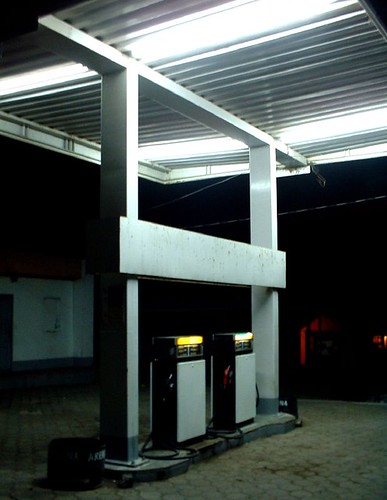
The photo department thinks this is the best picture the staff photographer took in Nicaragua. Its masterful composition and evocative lighting aside, the subject matter is kind of mundane at first, until you realize that there is absolutely no advertising anywhere at this gas station. Or at least, that's what the photo editor claims. Maybe the petroleum-industry chemical engineers in the crowd are looking at which model of petrol-delivery technology they use on remote Nicaraguan islands.
A little country that starts with an "N" and ends with and "a" and in the middle is "icaragu"
Gazing back into the mists of time... it's been fully two weeks since we went to Nicaragua. But this newspaper feels a civic duty to document these final few steps as Katherine closes in on every traveler's goal of visiting as many countries as she has spent years on the planet. (If we collect all seven Central American countries by the time we leave, she'll have it with one to spare. Nicaragua is number four of the seven. Once she hits 30 countries during her 30th year, she wins a free liter of the local watery lager at the flea-ridden Hostel International of her choice (Offer not valid in CA).)
We wound up going to Nicaragua mostly because Copa Airlines was running a big fare sale for New Year's, but the flights to Costa Rica and Panama were booked. We went ahead and bought tickets first, then checked the guidebook to see if there is actually anything to do in Nicaragua. Thankfully, there is.
Throwing around our American dollars as time was the more precious resource, we took a taxi from the Managua airport all the way to Granada. Not to be confused with the tiny island we liberated in 1983, Granada is Nicaragua's take on the "charming colonial town near scenic volcanos" genre which Antigua Guatemala has perfected. No shame in second place for Granada, though: It's got beautiful old convents and churches, a great main plaza for strolling in, a local delicacy made of spiced cabbage and pork rinds served on a banana leaf, and if that wasn't enough, it adds a lake the size of El Salvador to the mix.
We had two main tasks there: First on the slate was kayaking around the small islands that resulted from some long-ago volcanic eruption. Lake Nicaragua is big enough to develop some serious waves (and to support freshwater sharks!), but in the still water of the many inlets, a swamp -- almost a charicature of a swamp -- has developed. The water is completely covered in small floating plant life; the sensation was of kayaking across a carpet rather than a lake. There were gnarled trees shooting off roots and branches in every direction, creatively formatted flowers, and tiny jumping fish that one could catch just by putting a hand at the surface of the water and waiting for one to jump on. On slightly less protected islands, we saw an agressive spider monkey who made your faithful correspondant wish his rabies shots were up-to-date, more birds, and a fort that was built back when French pirates would sail up the river, into the lake, and sack Granada. Avast, ye lubbers!
The second adventure took us to Ometepe, the volcanic island in the middle of the lake. After dutifully avoiding them in Guatemala for months due to safety concerns, we took the "chicken bus" to San Jorge, where we could catch the ferry to the island. "Chicken bus" is the term used for the school buses that American school districts have deemed unsafe, which are then auctioned off, driven to Central America, repainted in gaudy colors, and then put in service on inter-city routes at far beyond capacity, blaring latin pop songs, leaving a wake of detritus and debris as people throw the trash from snacks sold on board out the windows, packed to bursting with people, market goods, and every now and again, the namesake chickens. To complete the experience, we each had a bottle of soda served in a plastic sandwich bag with a straw. (The seller can't give away the bottle with the soda, or they would lose the deposit.) I admit it: taking a "When in Rome" attitude, I threw my plastic baggie out the window. I'm not proud of it. I just got swept up in the latin flavor. On behalf of America, I apologize.
After the bus and another taxi ride, we took the ferry to Moyogalpa, the town on Ometepe island, and with Jesus's help, arrived safely. New Year's Eve was deciedly low key, as we sat in a near-empty bar enjoying the floor show of five-year-olds enraptured by sparklers and the musical accompaniment of max-volume American music videos on DVD, which transitioned over the course of the evening from the gangsta rap of Jay-Z and 50 Cent to the epic rock of Guns 'n' Roses' "November Rain" to several songs of 80's pop like A-Ha and the Bangles, and eventually, inexplicably, to 110 decibels of easy-listening AM Gold, like that one song that goes "Loving you/Is easy 'cause you're beautiful / Doo do do do doooo, oooh AAAAAAAAHHHHHH!" We were in bed by ten.
While that may have been an adventure in itself, the Official Adventure was climbing Volcan Concepcion, which juts out of the middle of the lake and rises to 1610 meters (almost exactly one mile) in altitude. In a venerable tradition that those accustomed to hiking in US National Parks may find peculiar, the "trail" went basically straight up the side of the mountain, with no apparent course-setting -- it was a deer path that enough people had walked up, or enough rain had run down, to clear a line through the jungle. About halfway up, the jungle suddenly ended, and we scrambled up jagged volcanic rock and diabolically placed scree. Once we got out of the jungle, we experienced the climate zones of fog, mist, cloud, rain inside of misty cloud, and innumerable others. Our guide, a typically lean young Nicaraguan, and the other tourist climbers that day, two surfer dudes from California, more or less ran up the mountain, periodically waiting for us to huff along a few minutes behind them. After four hours of climbing with nary a switchback, the guide declared it too dangerous to go any further. We felt a little cheated, until the guide explained that the top was really only 20 meters away and that you couldn't see anything there anyway, because the prevailing climate zone there was "dense cloud with fog and mist," and that the muddy ash at the very top was truly too slippery to climb. We weren't going to tempt any kind of "Into Thin Air" situation; we declared victory, snapped a photo of us sopping wet at the summit (of which all copies have been destroyed at Katherine's request and the Holla photo editor's enthusiastic assent), and began to pick our way down the scree fields. All injuries sustained were minor.
Eventually, the clouds parted briefly, presenting some disorienting views. Being on the very evenly sloped side of the mountain, then suddenly seeing farmland straight ahead surrounded by lake water the same flat gray as the sky, making the shore line look like a horizon line, can make one's head spin for just a moment. [As can run-on sentences with too many commas, which we hope to limit in the future. -ed.] Much to our guide's frustration, we stopped and enjoyed the only good views of the day before descending the rest of the way.
In an unusual twist, one of the surfer dudes was wearing fashionably low-cut socks, and could barely walk by the time he got down to the bottom; the backs of his ankles were rubbed completely raw. At which point we were informed that the bus that would take us the three miles back to the village wouldn't be running that day. Yet surfer dude was resistant to pay a couple bucks to get a ride in the back of a pickup. Ah, the budget-savvy backpacking world! We laughed and laughed. By that evening, our quads were so sore that we couldn't walk for three days, and this correspondent had to shuffle his way around the office even slower than is normally dictated by his role as a government bureaucrat, while the guy with the anklet socks was probably already out Surfing Nicaragua with some band-aids on his ankles.
We wound up going to Nicaragua mostly because Copa Airlines was running a big fare sale for New Year's, but the flights to Costa Rica and Panama were booked. We went ahead and bought tickets first, then checked the guidebook to see if there is actually anything to do in Nicaragua. Thankfully, there is.
Throwing around our American dollars as time was the more precious resource, we took a taxi from the Managua airport all the way to Granada. Not to be confused with the tiny island we liberated in 1983, Granada is Nicaragua's take on the "charming colonial town near scenic volcanos" genre which Antigua Guatemala has perfected. No shame in second place for Granada, though: It's got beautiful old convents and churches, a great main plaza for strolling in, a local delicacy made of spiced cabbage and pork rinds served on a banana leaf, and if that wasn't enough, it adds a lake the size of El Salvador to the mix.
We had two main tasks there: First on the slate was kayaking around the small islands that resulted from some long-ago volcanic eruption. Lake Nicaragua is big enough to develop some serious waves (and to support freshwater sharks!), but in the still water of the many inlets, a swamp -- almost a charicature of a swamp -- has developed. The water is completely covered in small floating plant life; the sensation was of kayaking across a carpet rather than a lake. There were gnarled trees shooting off roots and branches in every direction, creatively formatted flowers, and tiny jumping fish that one could catch just by putting a hand at the surface of the water and waiting for one to jump on. On slightly less protected islands, we saw an agressive spider monkey who made your faithful correspondant wish his rabies shots were up-to-date, more birds, and a fort that was built back when French pirates would sail up the river, into the lake, and sack Granada. Avast, ye lubbers!
The second adventure took us to Ometepe, the volcanic island in the middle of the lake. After dutifully avoiding them in Guatemala for months due to safety concerns, we took the "chicken bus" to San Jorge, where we could catch the ferry to the island. "Chicken bus" is the term used for the school buses that American school districts have deemed unsafe, which are then auctioned off, driven to Central America, repainted in gaudy colors, and then put in service on inter-city routes at far beyond capacity, blaring latin pop songs, leaving a wake of detritus and debris as people throw the trash from snacks sold on board out the windows, packed to bursting with people, market goods, and every now and again, the namesake chickens. To complete the experience, we each had a bottle of soda served in a plastic sandwich bag with a straw. (The seller can't give away the bottle with the soda, or they would lose the deposit.) I admit it: taking a "When in Rome" attitude, I threw my plastic baggie out the window. I'm not proud of it. I just got swept up in the latin flavor. On behalf of America, I apologize.
After the bus and another taxi ride, we took the ferry to Moyogalpa, the town on Ometepe island, and with Jesus's help, arrived safely. New Year's Eve was deciedly low key, as we sat in a near-empty bar enjoying the floor show of five-year-olds enraptured by sparklers and the musical accompaniment of max-volume American music videos on DVD, which transitioned over the course of the evening from the gangsta rap of Jay-Z and 50 Cent to the epic rock of Guns 'n' Roses' "November Rain" to several songs of 80's pop like A-Ha and the Bangles, and eventually, inexplicably, to 110 decibels of easy-listening AM Gold, like that one song that goes "Loving you/Is easy 'cause you're beautiful / Doo do do do doooo, oooh AAAAAAAAHHHHHH!" We were in bed by ten.
While that may have been an adventure in itself, the Official Adventure was climbing Volcan Concepcion, which juts out of the middle of the lake and rises to 1610 meters (almost exactly one mile) in altitude. In a venerable tradition that those accustomed to hiking in US National Parks may find peculiar, the "trail" went basically straight up the side of the mountain, with no apparent course-setting -- it was a deer path that enough people had walked up, or enough rain had run down, to clear a line through the jungle. About halfway up, the jungle suddenly ended, and we scrambled up jagged volcanic rock and diabolically placed scree. Once we got out of the jungle, we experienced the climate zones of fog, mist, cloud, rain inside of misty cloud, and innumerable others. Our guide, a typically lean young Nicaraguan, and the other tourist climbers that day, two surfer dudes from California, more or less ran up the mountain, periodically waiting for us to huff along a few minutes behind them. After four hours of climbing with nary a switchback, the guide declared it too dangerous to go any further. We felt a little cheated, until the guide explained that the top was really only 20 meters away and that you couldn't see anything there anyway, because the prevailing climate zone there was "dense cloud with fog and mist," and that the muddy ash at the very top was truly too slippery to climb. We weren't going to tempt any kind of "Into Thin Air" situation; we declared victory, snapped a photo of us sopping wet at the summit (of which all copies have been destroyed at Katherine's request and the Holla photo editor's enthusiastic assent), and began to pick our way down the scree fields. All injuries sustained were minor.
Eventually, the clouds parted briefly, presenting some disorienting views. Being on the very evenly sloped side of the mountain, then suddenly seeing farmland straight ahead surrounded by lake water the same flat gray as the sky, making the shore line look like a horizon line, can make one's head spin for just a moment. [As can run-on sentences with too many commas, which we hope to limit in the future. -ed.] Much to our guide's frustration, we stopped and enjoyed the only good views of the day before descending the rest of the way.
In an unusual twist, one of the surfer dudes was wearing fashionably low-cut socks, and could barely walk by the time he got down to the bottom; the backs of his ankles were rubbed completely raw. At which point we were informed that the bus that would take us the three miles back to the village wouldn't be running that day. Yet surfer dude was resistant to pay a couple bucks to get a ride in the back of a pickup. Ah, the budget-savvy backpacking world! We laughed and laughed. By that evening, our quads were so sore that we couldn't walk for three days, and this correspondent had to shuffle his way around the office even slower than is normally dictated by his role as a government bureaucrat, while the guy with the anklet socks was probably already out Surfing Nicaragua with some band-aids on his ankles.
Subscribe to:
Posts (Atom)

 Posts
Posts